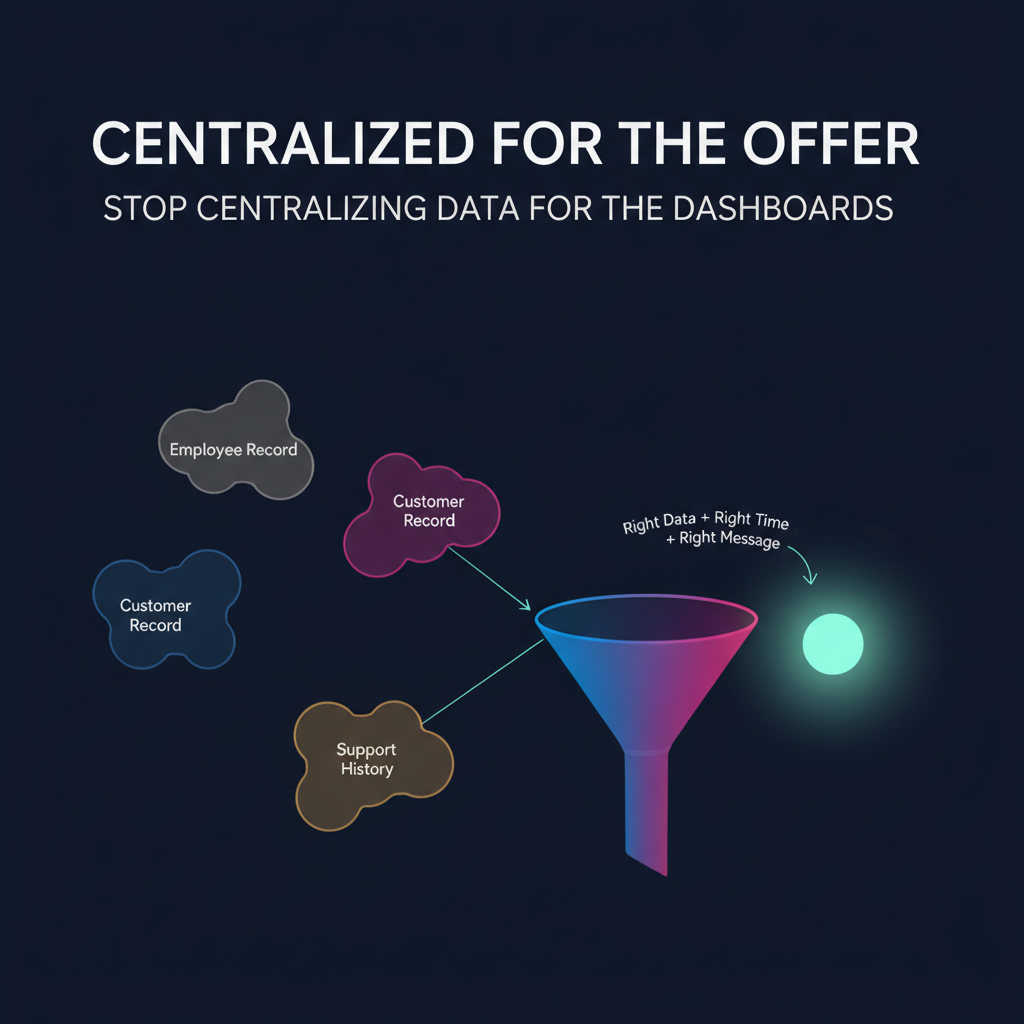
Every founder I talk to says the same thing: "we need to centralize our data." Ask why, and most of them describe a reporting problem. Their dashboards are a mess. Sales numbers live in one tool, support tickets in another, HR data in a third. They want one clean view.
That's not wrong. It's just not the reason that matters.
The real reason: Hyper-Personalization
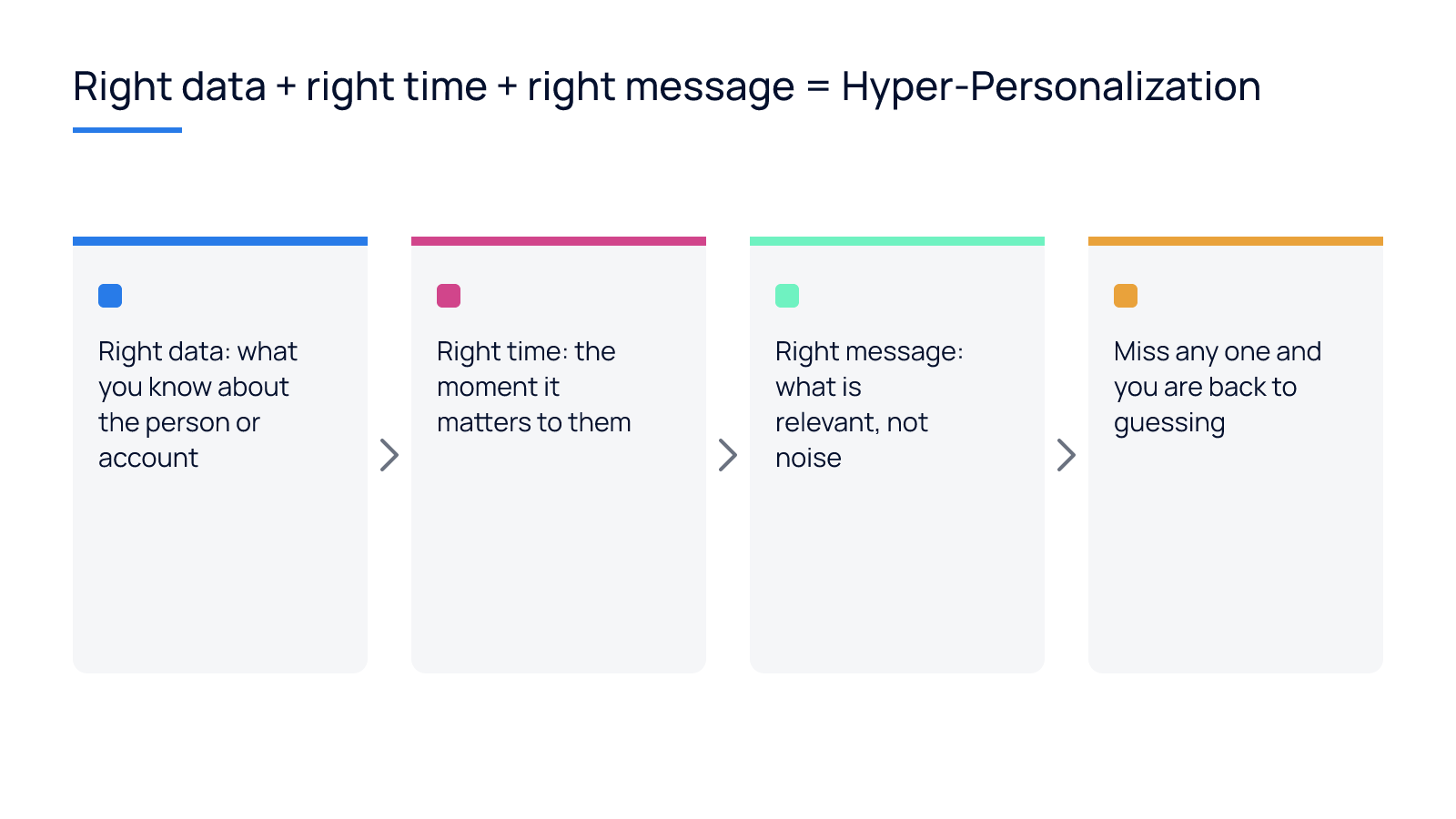
Centralized data isn't valuable because it's tidy. It's valuable because it lets you do one thing at scale: say the right thing to the right person at the right moment. I think about it as a formula:
Right data + right time + right message = Hyper-Personalization.
Miss any one of the three and you're back to guessing. Right data with no timing is a report nobody reads. Right timing with no message is a notification nobody opens. This applies whether you're talking about employees or customers, and most companies are only doing it for neither.
Employees: the record you're not keeping
Most companies have an employee's data scattered across an ATS, an HRIS, a performance tool, and a manager's memory. Nobody owns the full record from interview to exit.
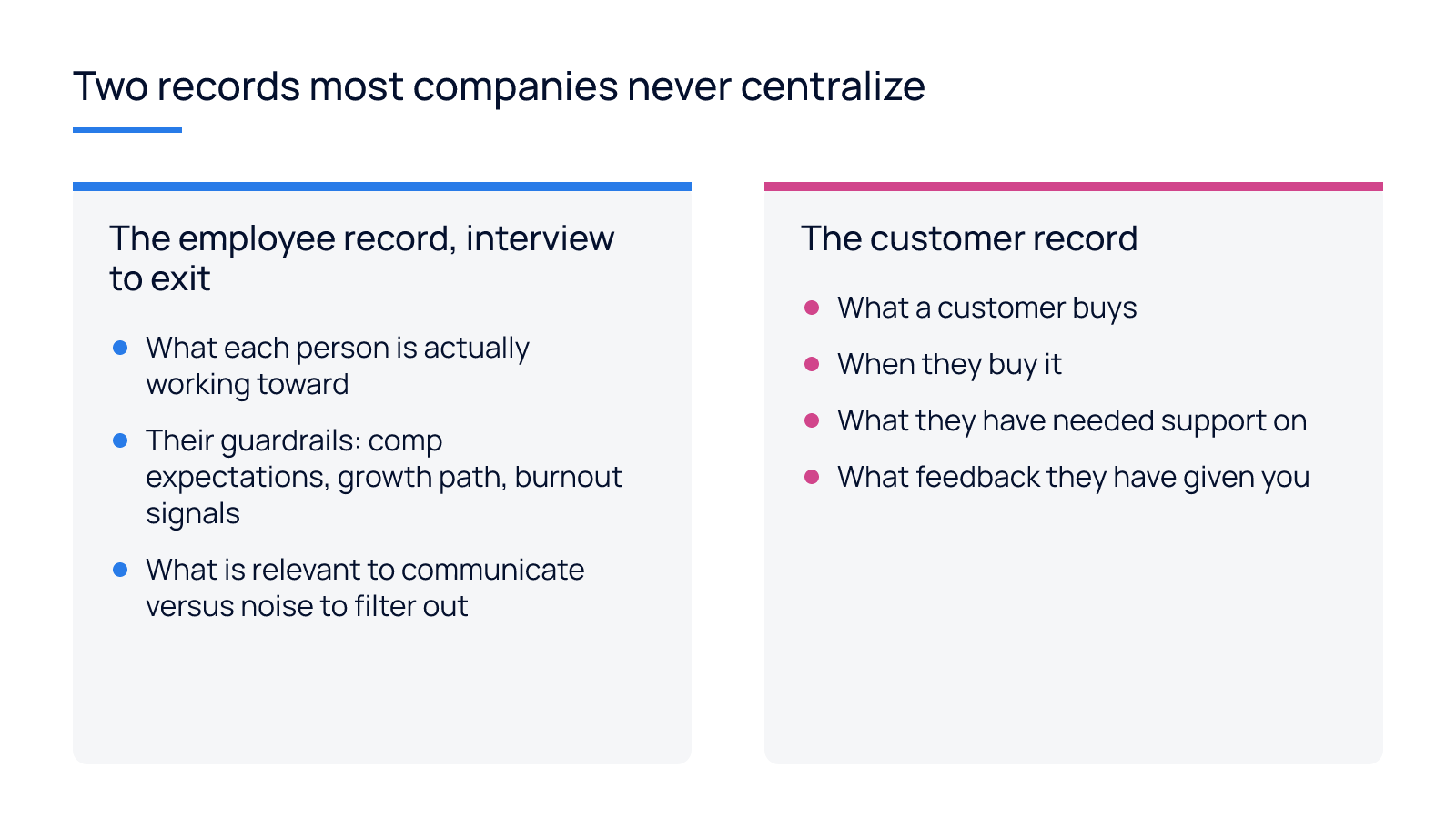
If you centralized it, you'd know what each person is actually working toward, what their guardrails are (comp expectations, growth path, burnout signals), and what's relevant to communicate to them versus noise to filter out. That's not HR nicety. Better-served employees perform better, and performance shows up in your revenue line. If your best account manager is disengaged because nobody tracked that she's six months from a promotion conversation she was promised, that's a sales problem wearing an HR costume.
Customers: the offer you're not making
the best opportunity in business is selling more to existing clients
The cheapest growth in any business is selling more to the people who already trust you. Not new logos. Existing ones.
To do that well you need to know what a customer buys, when they buy it, what they've needed support on, and what feedback they've given you. Put those four things together and you can make an offer that feels like it was built for that one account, because it was. Miss them and you're back to the blast email that goes to everyone and converts almost nobody.
Mass mailing isn't a channel problem. It's a data problem wearing a marketing costume.
Why this is a staffing decision, not just a tooling decision
Here's where most companies go wrong. They hear "Hyper-Personalization" and think "we need an AI engineer" or "we need a CRM upgrade." So they hire, or they buy software, before they know what data they actually have, where it lives, and whether it's usable.
That's backwards. I've sat across the table from enough founders who staffed up first to know how this goes: you hire an AI engineer or a head of AI, and three months in they're still trying to figure out where the customer support data lives and whether the HR system even has clean start dates. You paid for execution before you had anything worth executing on.
The formula only works if the first term, the right data, is actually right. That means knowing what you have, what's missing, what's duplicated, and what's unusable before you hire anyone to build on top of it.
The audit before the hire
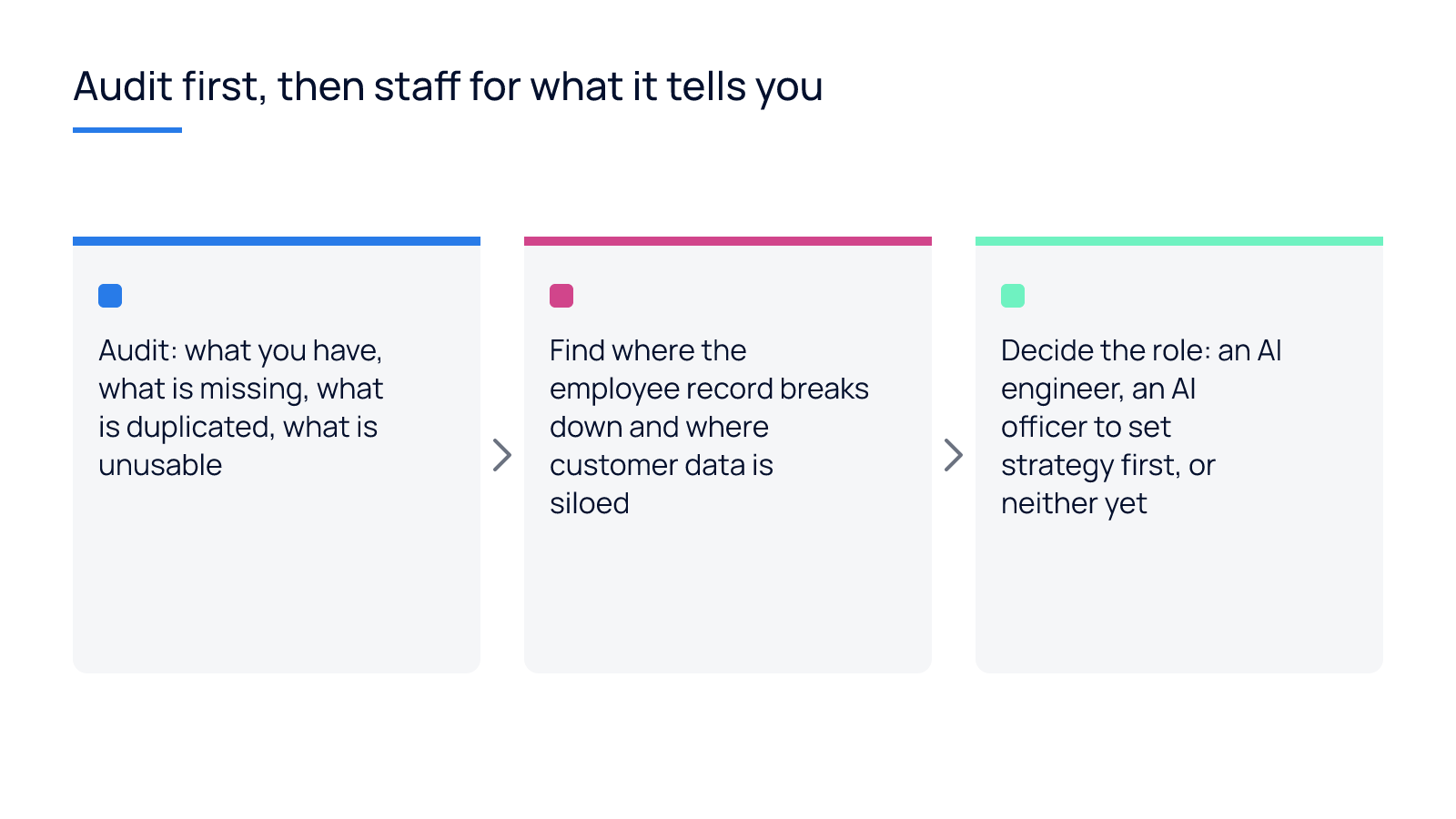
This is the whole argument for doing an audit before you staff up. An audit tells you where your employee record actually breaks down, where your customer data is siloed, and what kind of person (or people) you actually need to fix it. Sometimes that's an AI engineer. Sometimes it's an AI officer who can set the strategy first. Sometimes it's neither yet, because the data problem is more basic than an AI problem.
Skip the audit and you're staffing on a guess. That's how companies end up with an expensive hire solving the wrong problem, which I've seen enough times to stop being surprised by it.
The takeaway
Centralizing data isn't about cleaner reporting. It's about being able to say the right thing to the right employee or customer at the right time, at scale. If you don't know what data you have or whether it's usable, don't hire yet. Audit first. Then staff for what the audit actually tells you.
Reply to talk about the roles you actually need, or book an AI Consultation before you hire.
The Automated Marketing and Sales CRM case study shows the marketing and sales system this data feeds.
FAQ## FAQ
What does it mean to centralize company data?
It means bringing the records that live in separate tools, sales, support, HR, finance, into one system where they describe the same person or account. The value is not a tidier dashboard. It is being able to say the right thing to the right employee or customer at the right moment, at scale.
Why should a company centralize employee data?
Most companies hold an employee's record across an ATS, an HRIS, a performance tool and a manager's memory, so nobody owns the full picture from interview to exit. Centralize it and you know what each person is working toward, what their guardrails are and what is worth communicating to them. Better-served employees perform better, and that shows up in revenue.
What is hyper-personalization in customer marketing?
It is the formula right data plus right time plus right message. Know what a customer buys, when they buy it, what they needed support on and what feedback they gave, and you can make an offer that feels built for that one account. Miss any of the three and you are back to the blast email that converts almost nobody.
Should you audit your data before hiring an AI engineer?
Yes. An audit tells you where the employee record breaks down, where customer data is siloed and what kind of person you actually need to fix it. Skip it and you are staffing on a guess, which is how companies end up with an expensive hire solving the wrong problem.
What is the difference between an AI engineer and an AI officer?
An AI engineer builds on top of data that is already usable. An AI officer sets the strategy first: what data you have, what is missing and which workflows are worth automating. Sometimes the audit shows you need neither yet, because the data problem is more basic than an AI problem.