Two years ago we started putting AI to work inside Edge8. The first phase paid off in efficiency, and I want to be precise about what that means, because I have no headline revenue figure to show you and I will not invent one. Our core revenue grew, and it held. We did it with the same size team. When people left, most were not replaced. The work went to agents (software that carries out a task on its own inside a set of rules) running on one owned database. That is the whole efficiency story, and it is a good one.
It is also the story almost every company is telling right now. AI saves money. Fewer hours, fewer seats, fewer tools. Fine. But saving money has a floor. You can only cut so far before you are cutting into the thing that makes the money in the first place.
So the next phase of our AI work is not aimed at the cost side. It is aimed at the revenue department, and at one job in particular: writing one message per person, from what we actually know about them. I am going to make the case for why that is where the money is, and then tell you exactly how far along Edge8 is. That second part is the part nobody sells you.
Where the money in AI actually is
Data foundations are a major line item.
They had customer data enabling hyper personalization but could not generate content fast enough to leverage it. Traditional agency workflows took seven weeks per campaign.
Revenue from AI is real, but still rare, and follows three patterns.
In March 2026 the Stanford Digital Economy Lab published "The Enterprise AI Playbook" by Pereira, Graylin and Brynjolfsson. It is the most honest thing I have read on the subject. The line that matters most: "Revenue from AI is real, but still rare, and follows three patterns." The three, in the report's words: "Personalization that converts, speed that wins deals, and internal tools repackaged as products."
Personalisation is first on that list, and the case behind it should be pinned above every marketing lead's desk. A financial services company. The report says: "They had customer data enabling hyper personalization but could not generate content fast enough to leverage it. Traditional agency workflows took seven weeks per campaign."
The data was already there. The bottleneck was not insight and it was not the model. It was production. Seven weeks per campaign meant the personalisation their data allowed was theoretical. By the time a message shipped, the moment it was written for had passed.
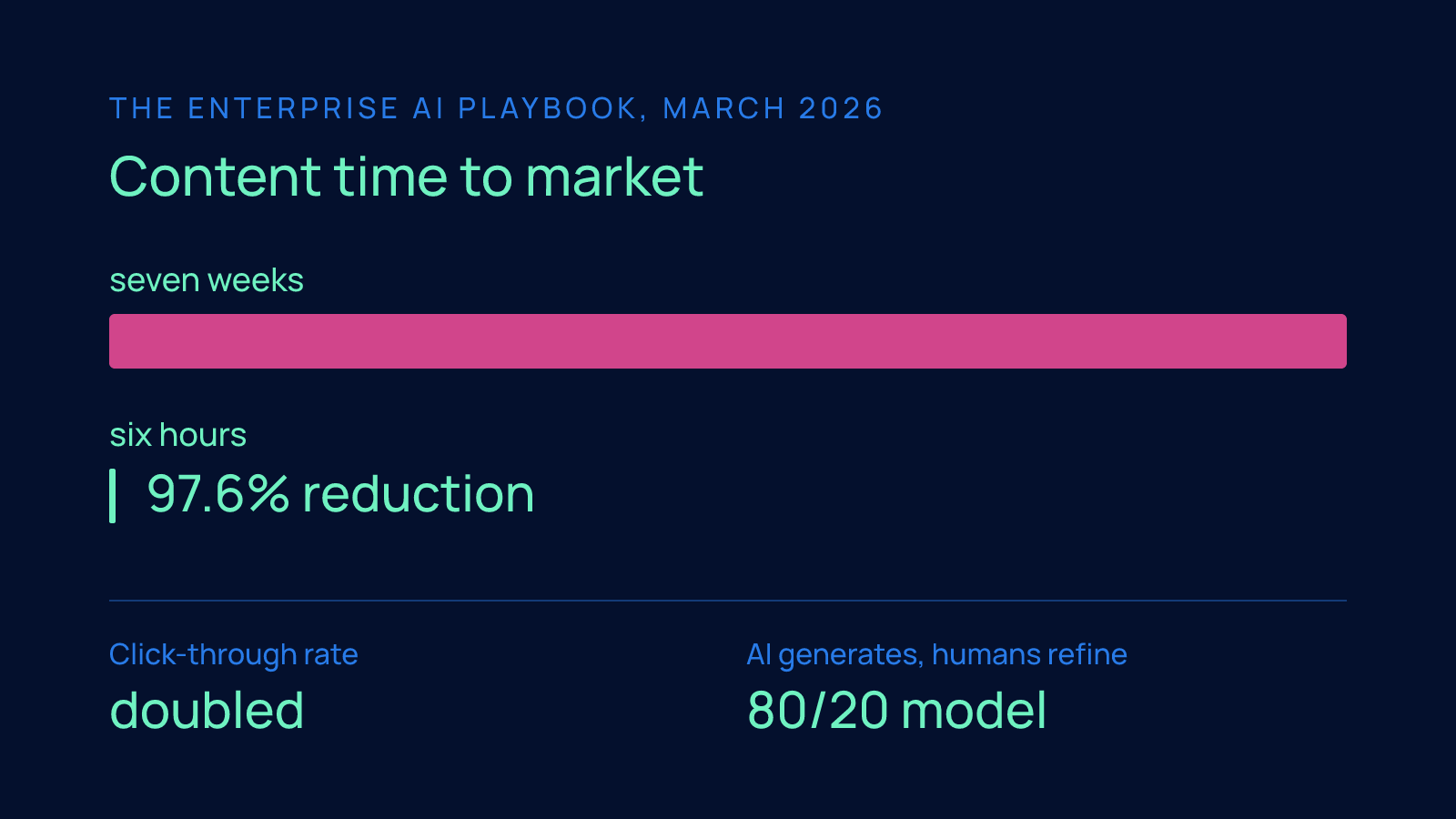
What changed: content time to market (the gap between deciding to send something and sending it) went from seven weeks to six hours. The report puts that at a 97.6% reduction. Production time fell by more than 80%. Click-through rate, the share of recipients who click a link, doubled. And the team did not hand the whole thing to a machine. They chose an 80/20 model: AI generates, humans refine. Two more lines from the report belong here. "Human oversight is not a tax on productivity." And: "The oversight level should match the stakes."
Those are the report's numbers, not mine. Edge8 has not doubled anything. But look at the shape of the win. Not more data. Not a smarter model. A workflow that could turn data they already owned into a message fast enough to matter.
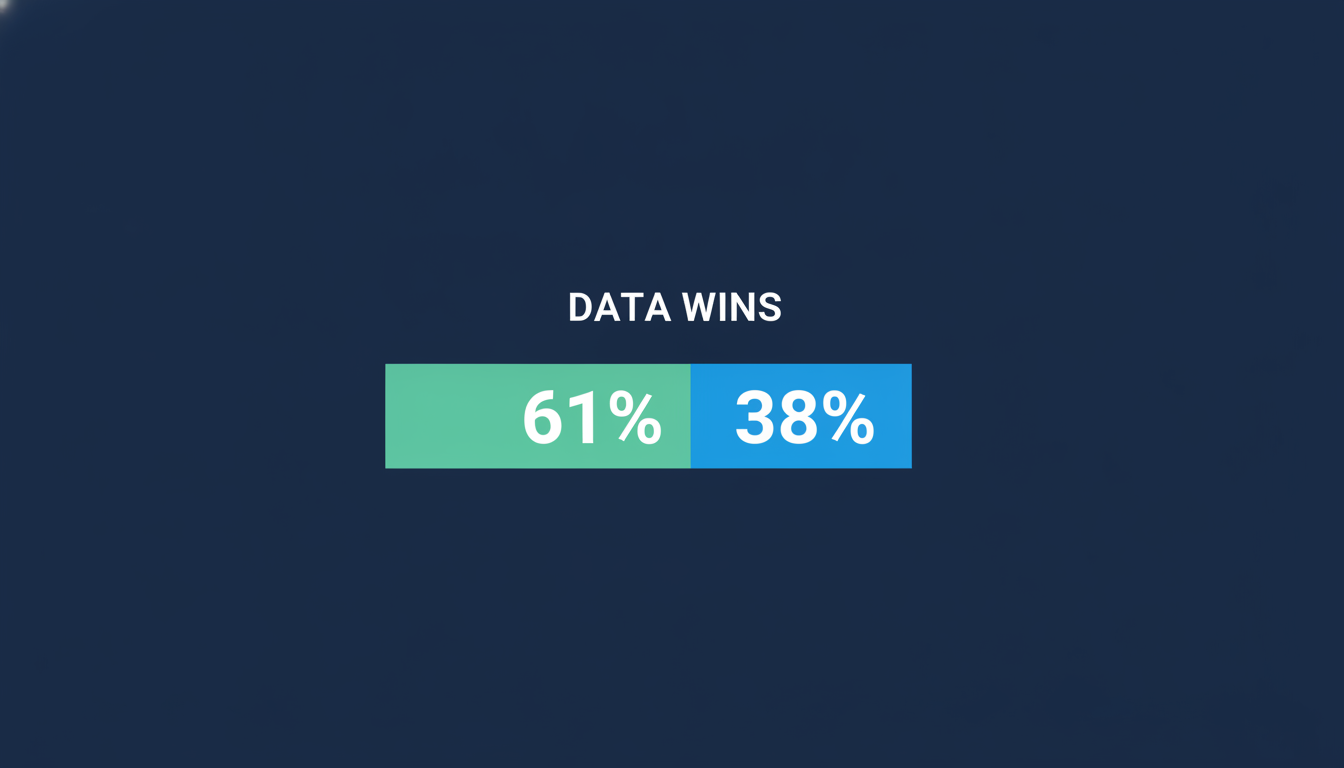
One more number from the report, because it is the hinge of this post. The companies it calls strategic scalers, the ones seeing real returns, are far more likely to possess a large, accurate data set: 61% versus 38% for everyone else. The report's own summary: "Data foundations are a major line item."
Personalisation is a data problem before it is a model problem
Here is the thesis, plainly. Most AI spending saves money. The money is made in personalisation: one message per person, written from what you actually know about them. And personalisation that converts is a data-plus-workflow problem long before it is a model problem.
A model can write anything. What it cannot do is know things about your customer that you have not put somewhere it can read. If your leads are in a CRM (the system that tracks your contacts and deals), your meetings are in a calendar tool, your emails are in an inbox and your deal stages are in a spreadsheet, the model has four partial views of a person and no way to join them. It will write you a very fluent segment message. It will not write to a person.
The personalisation you are being sold as a feature inside your email tool is segmentation with a first-name token. Real personalisation means the message knows why this person came to you, what their company is dealing with, what stage their deal is at and what was said in the last meeting. That comes from your own connected data, or it does not exist.
Where Edge8 actually is: step one
Now the honest turn. I believe what I just wrote more than almost anything else in our business. And Edge8 is at step one.
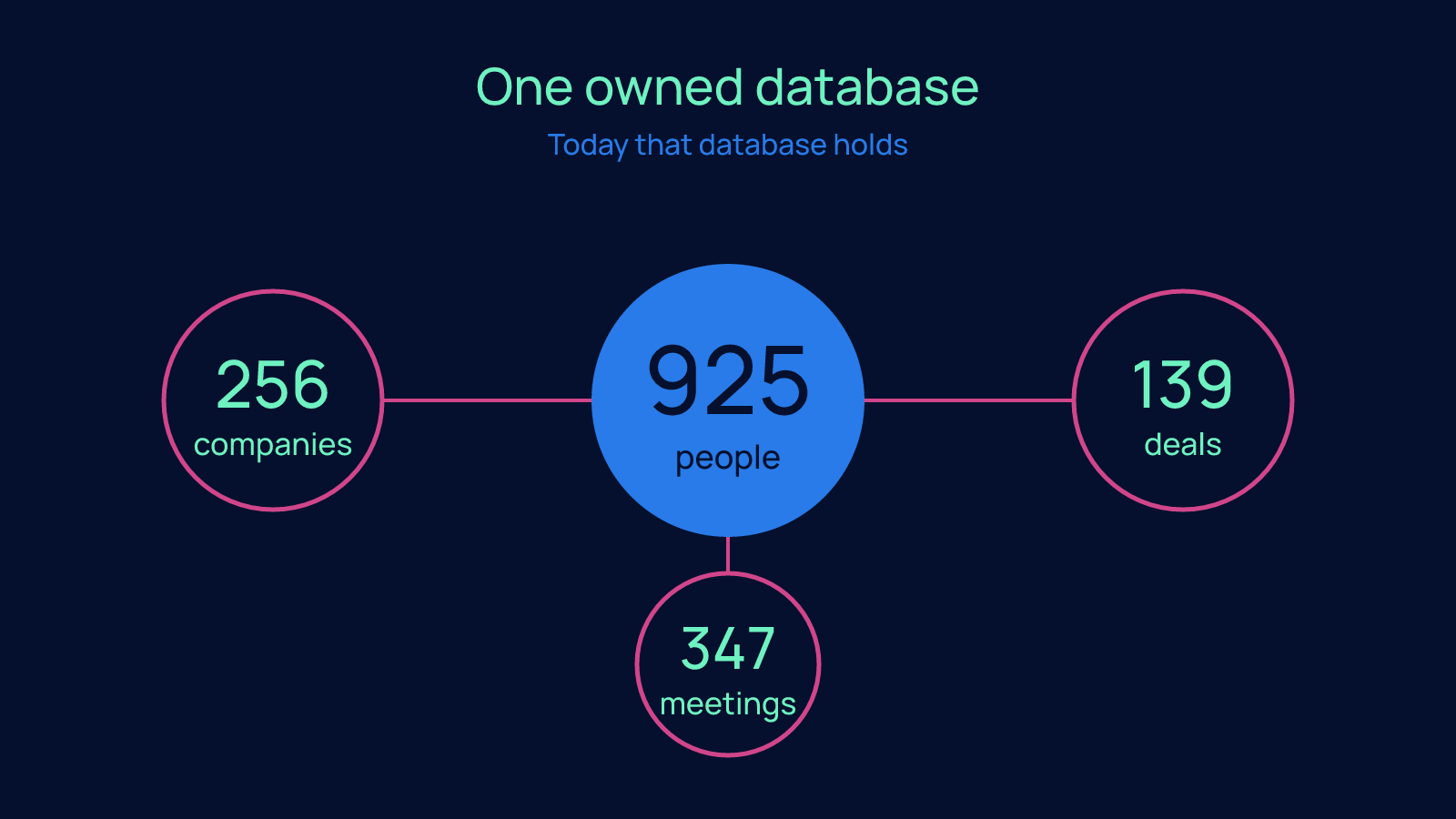
We have not achieved hyper-personalisation. We have not measured a lift from it. We do not send personalised messages at scale. What we have done is spend months getting our own data into one owned database, so that a person, their company, their deal, their meetings and their emails sit on one record. Today that database holds 925 people, 256 companies, 139 deals and 347 meetings.
Until that existed, there was nothing to personalise from. That is the lesson. Not the model choice. Not the prompt. The order of operations.
The order of operations, as we lived it
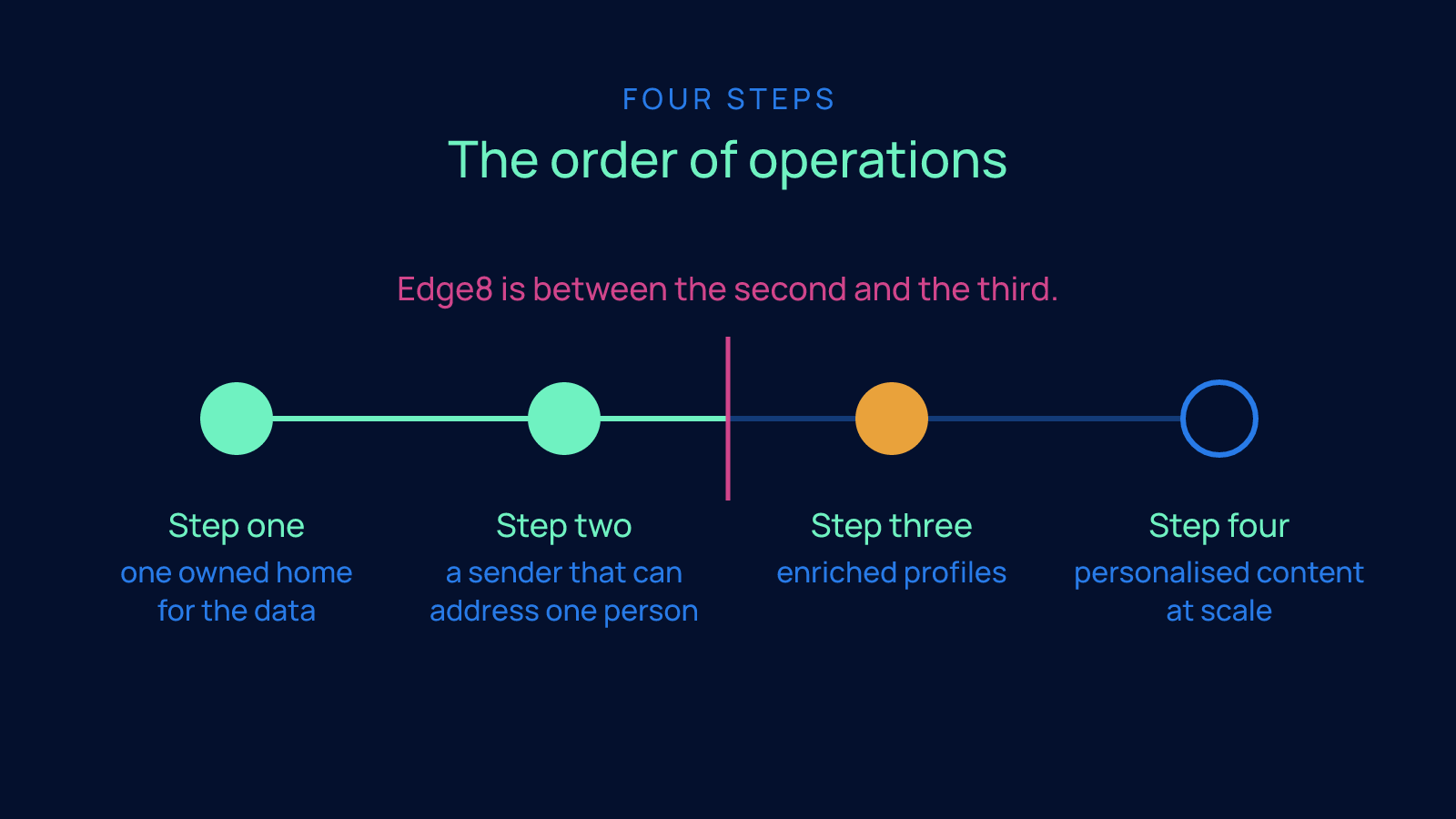
Four steps. Edge8 is between the second and the third.
Step one: one owned home for the data
Owned means it is our database, on our terms, not a view rented from a vendor. Every person gets one record, and hanging off that record are their company, their deal, every meeting we have had with them and every email exchanged. Getting there meant months of pulling exports, matching duplicates, deciding which system was right when two disagreed, and writing the connectors that keep it current. There is no demo for this. Nobody puts it on a slide. It is the work the 61% did and the 38% did not.
Step two: a sender that can address one person
Our email runs on Resend, a service for sending email from software rather than from an inbox. We built it to do two things: send one individual message at a time, or send a broadcast when a broadcast is the right tool. The broadcast side already carries real logic. Before each recipient's send, it re-checks that person against the live CRM the moment before it fires, so someone who became a customer or unsubscribed an hour ago is handled correctly. It honours a send window in the recipient's time zone. The weekly letter is written by an agent from the last ten days of company events, picks three posts the list has not yet seen, and tags every link so the next letter learns from what was clicked. A person approves and starts every send. That is the report's oversight principle in practice: the stakes are our reputation with 925 people, so a human is on the button. The full workflow is on Edge8's email broadcasts page.
Be clear about what that letter is, though. It is a good broadcast. It is still one message to many. This is exactly where most companies stop and call it personalisation.
Step three: enriched profiles
This is the step we are on now. Enriching the people database one profile at a time with what a message should know about that person: their role, their company's context, what they came to us for, and where their deal stands. Once that sits on the record, content can be written to a person rather than to a segment. It is slow by design. Getting it right for one person is the whole point; getting it wrong at scale is worse than a broadcast.
Step four: personalised content at scale
We are not here. The financial services company in the Stanford report was here, and the shape of their operation is the shape we are aiming at: AI drafts, humans refine, the oversight matched to the stakes. When we get there, I will publish what it did to our numbers. I will not publish numbers I do not have.
Why leads and open deals come first
We are not personalising for all 925 people. Personalised outreach is being built first for the people who are currently leads or open deals in the CRM, because that is where one right message is worth the most. A live lead who receives a message that names their situation, their company and the thing they asked us about is in a different conversation from one who receives the weekly letter. Everyone else still gets the broadcast, and the broadcast is good. Nothing about this is finished. I am telling you the order because the order is the useful part.
The small-company version of step one
If 925 people and 139 deals sounds like a scale problem you do not have yet, here is a smaller version. A pre-launch wellness startup we work with was tracking partners in Notion, orders in Shopify, a waitlist in an email tool and the rest in spreadsheets. Four systems, four partial views. The only message they could send was the same message to everyone.
Once partners, waitlist and orders sat in one owned home, per-partner outreach became possible: which conversation is live, what stage the contract is at, what each person on the waitlist signed up for. It is possible now. It is not yet measured, and I will not pretend otherwise. What I can say is that no CRM subscription was bought to get there. The foundation was built, not rented. Founders who sell through partners will recognise the problem immediately: every partner needs a different message, and a newsletter cannot send one.
The same method, pointed inward
Inside Edge8 this approach is further along, because the data was easier to bring together. Each team member's survey answers, their published OCEAN profile (a five-trait personality model: openness, conscientiousness, extraversion, agreeableness and neuroticism), their goals, their commitments and every prior one-on-one transcript feed the biweekly coaching cycle. The coach knows each person better every cycle, and the AI-written prep and recap are written to that person, not to a template. It is proof that the method works once the data sits in one place. A later post covers it in full.
The revenue side of owning your data
Earlier this week I wrote about why you should own your data rather than rent views of it from vendors. This post is the revenue side of that argument. The efficiency phase pays for itself. The revenue phase is where AI earns its keep, and it runs on the same foundation: one owned home for the data, a sender that can address one person, enriched profiles, and only then personalised content at scale.
The months of foundation are the part nobody sells you, because there is nothing to sell. No vendor makes money on you matching duplicates and deciding what a person record should contain. But it is the 61% versus 38%. It is the difference between a financial services company sitting on data it cannot use and one whose click-through doubled.
The people who do that foundation should be on your team, not on a consultant's invoice: someone who owns the data layer, and someone who owns the workflow redesign and decides, like that 80/20 team did, where the human belongs. That is why this is a post about step one instead of a case study with a headline number. We are at step one. We know what step one costs.
One concrete next step
Open your CRM. Count the people who are live leads or open deals right now. Then write one sentence about each of them that a broadcast would never say: what they came for, where the deal stands, what was said last time.
If you can write those sentences, your data is in one place and you are closer than you think. If you cannot, you have just found step one.
Reply to Edge8 with that count. We will talk about who should build the foundation that lets you send it.
FAQ
How do I do personalised outreach with AI?
Most companies use AI to cut hours, seats and tools, and that saving has a floor because you can only cut so far before you cut into what makes the money. Personalised outreach with AI means writing one message per person from what you actually know about them, and Stanford's Enterprise AI Playbook lists personalisation that converts as the first of three patterns where AI produces revenue. The catch is that it is a data-plus-workflow problem before it is a model problem: a model can write anything, but it cannot know things about a customer that you have not put somewhere it can read.
Where does AI actually make money for a business?
The Enterprise AI Playbook, published in March 2026 by Pereira, Graylin and Brynjolfsson at the Stanford Digital Economy Lab, states that revenue from AI is real but still rare and follows three patterns. Those patterns are personalisation that converts, speed that wins deals, and internal tools repackaged as products. The report also finds that the companies seeing real returns, which it calls strategic scalers, are far more likely to hold a large, accurate data set: 61% versus 38% for everyone else.
Can AI-written marketing really double click-through rates?
The company already had customer data that allowed hyper-personalisation, but its agency workflow took seven weeks per campaign, so the moment a message was written for had passed by the time it shipped. After rebuilding production around AI, content time to market fell from seven weeks to six hours, a 97.6% reduction, production time fell by more than 80%, and click-through rate doubled. The team used an 80/20 model where AI generates and humans refine, and the report's principle is that the level of human oversight should match the stakes.
What data do I need before I can personalise messages with AI?
Edge8 spent months getting its own data into one owned database so that a person, their company, their deal, their meetings and their emails sit on a single record; today that holds 925 people, 256 companies, 139 deals and 347 meetings. The order of operations is one owned home for the data first, a sender that can address one person second, enriched profiles third, and only then personalised content at scale. Edge8 is between the second and third steps, enriching profiles one at a time and starting with people who are live leads or open deals in the CRM. It has not achieved hyper-personalisation or measured a lift from it yet.
Who should approve AI-written emails before they go out?
Edge8's email runs on Resend, a service for sending email from software rather than from an inbox, built to send one individual message at a time or a broadcast when a broadcast is the right tool. Before each recipient's send, the broadcast re-checks that person against the live CRM so anyone who became a customer or unsubscribed is handled correctly, and it honours a send window in the recipient's time zone. The weekly letter is drafted by an agent from the last ten days of company events, picks three posts the list has not seen, and tags every link so the next letter learns from clicks. A person approves and starts every send, which is the report's oversight principle in practice.