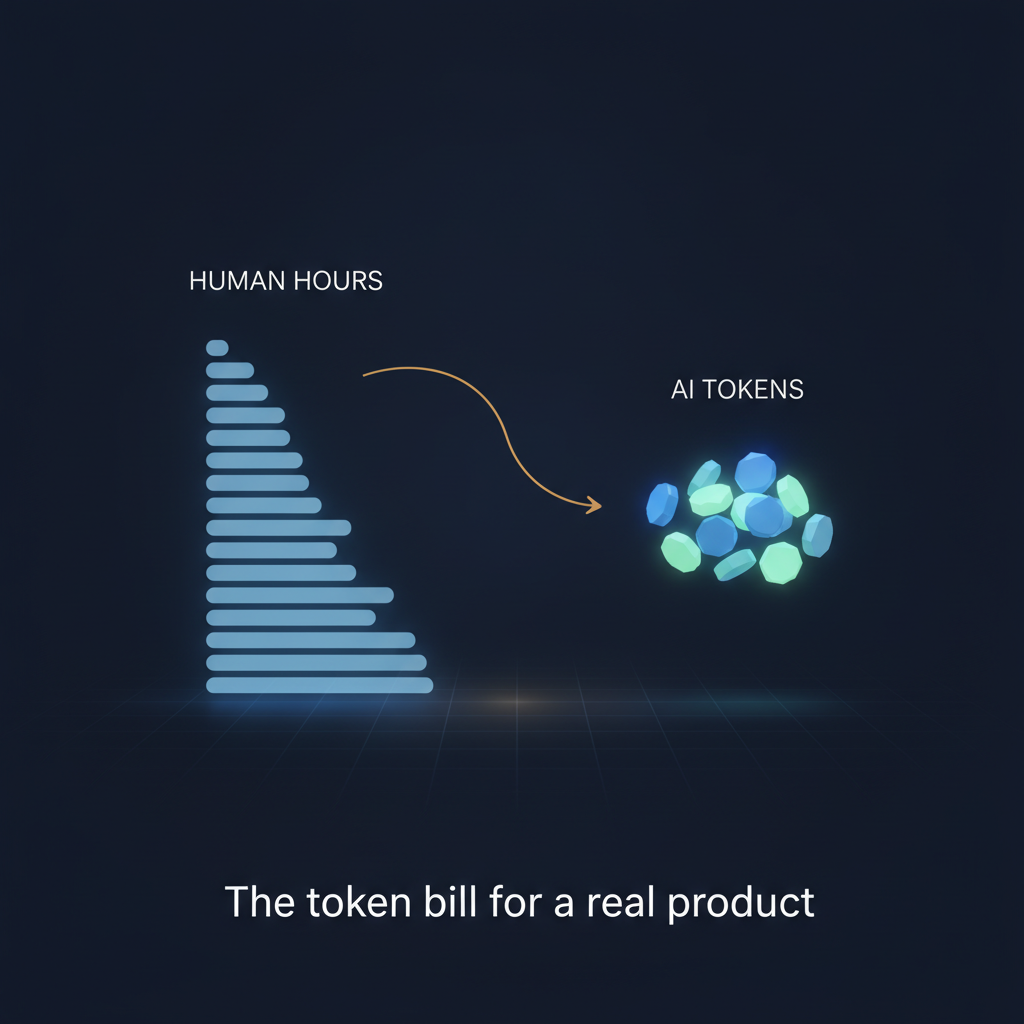
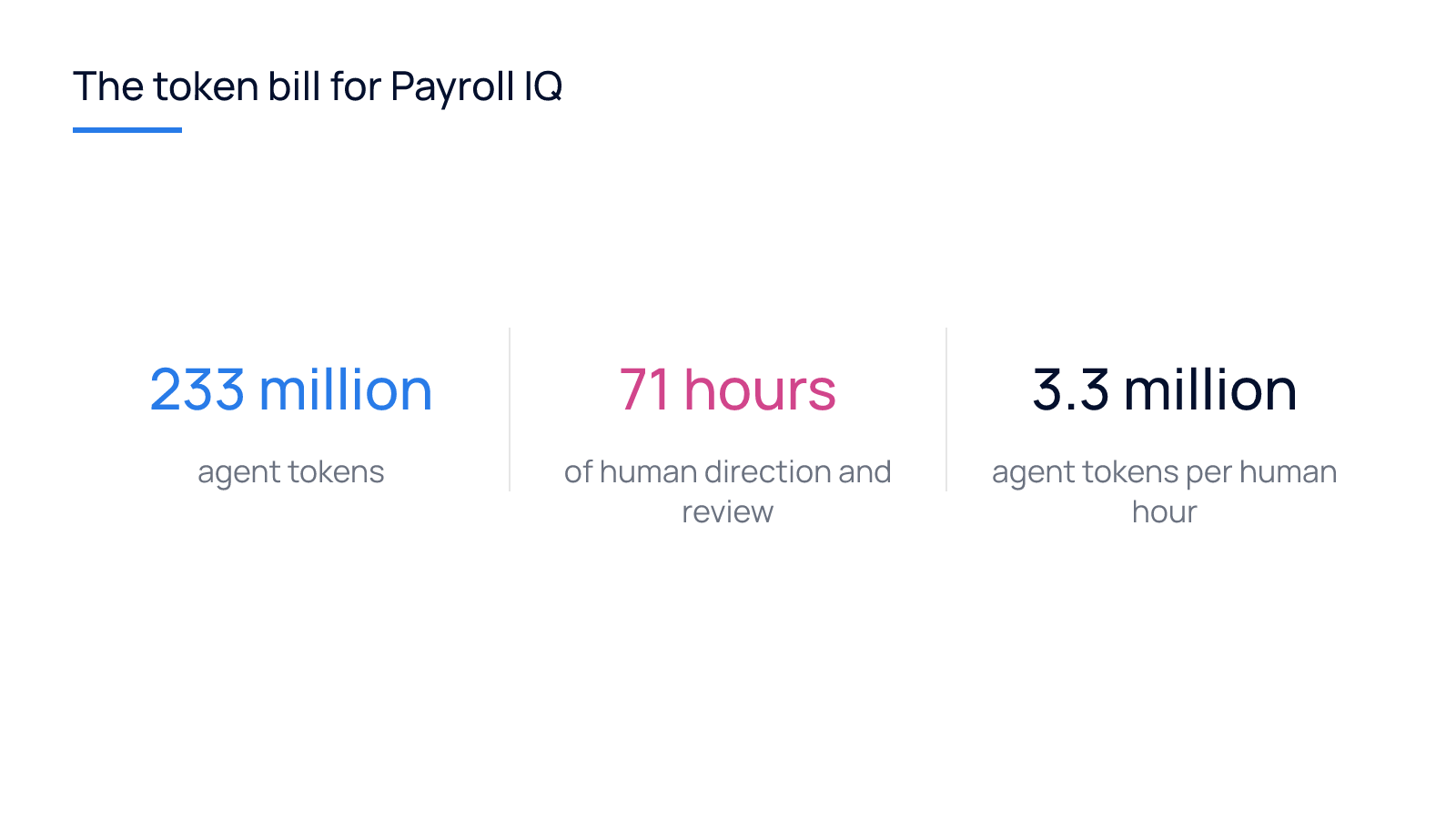
233 million agent tokens. 71 hours of human direction and review. That is the real bill for building Payroll IQ, and it is why you can now create training videos with AI that a solo expert could not have produced two years ago. Do the division: about 3.3 million agent tokens for every human hour. Sit with that ratio, because it changes what you build and who you hire to build it.
Tracy Angwin has spent twenty years teaching payroll. She built the Australian Payroll Association on it. By early 2026 she was staring at the number that keeps a lot of expert founders up at night: classroom training revenue was declining, and the acquisition target she was eyeing in the same space showed the same slow bleed.
Here is the trap she was sitting in. It is the same trap most subject matter experts sit in. The knowledge is real. The demand is real. But the delivery model wastes everyone's time. A busy payroll professional gives up a full working day to sit through eight hours of content, half of which they already know. Worse, payroll law changes constantly. Every rule update ages the material. To stay current, someone has to keep re-recording.
So the honest question was never "is the expertise valuable?" It was "what would it cost, in human hours, for one person to turn that expertise into a product and keep it alive?" That is the token bill. Once you add it up, the answer changes.
The math that makes solo impossible
Let me define the unit plainly, because it is the whole story. At Edge8 we count work in human tokens: one human token is one hour of skilled human work. It is the scarce input. You cannot buy more hours in a day, and Tracy has a business to run.
Now price out the old way of building Payroll IQ. Script 100 or more training videos. Record each one on camera. Light it, edit it, publish it. Then, every time the Fair Work rules shift or a threshold changes, go back and re-record the affected units. For one person, that is not a project. It is hundreds of hours she does not have, spent twice on the same footage.
That bill is why so much expertise never becomes a product. The founder does the math, feels the exhaustion in advance, and files the idea under "someday." The IP stays locked in documents and in staff heads, which is exactly where Tracy told us her biggest pain lived.
AI tokens change the price of that bill. Not the value of the work. The price of producing it. The tracker on this build tells the story: 233 million agent tokens carried the load, and the humans spent 71 hours. That is where the leverage sits.
How we create training videos with AI at scale
Two moves, in order.
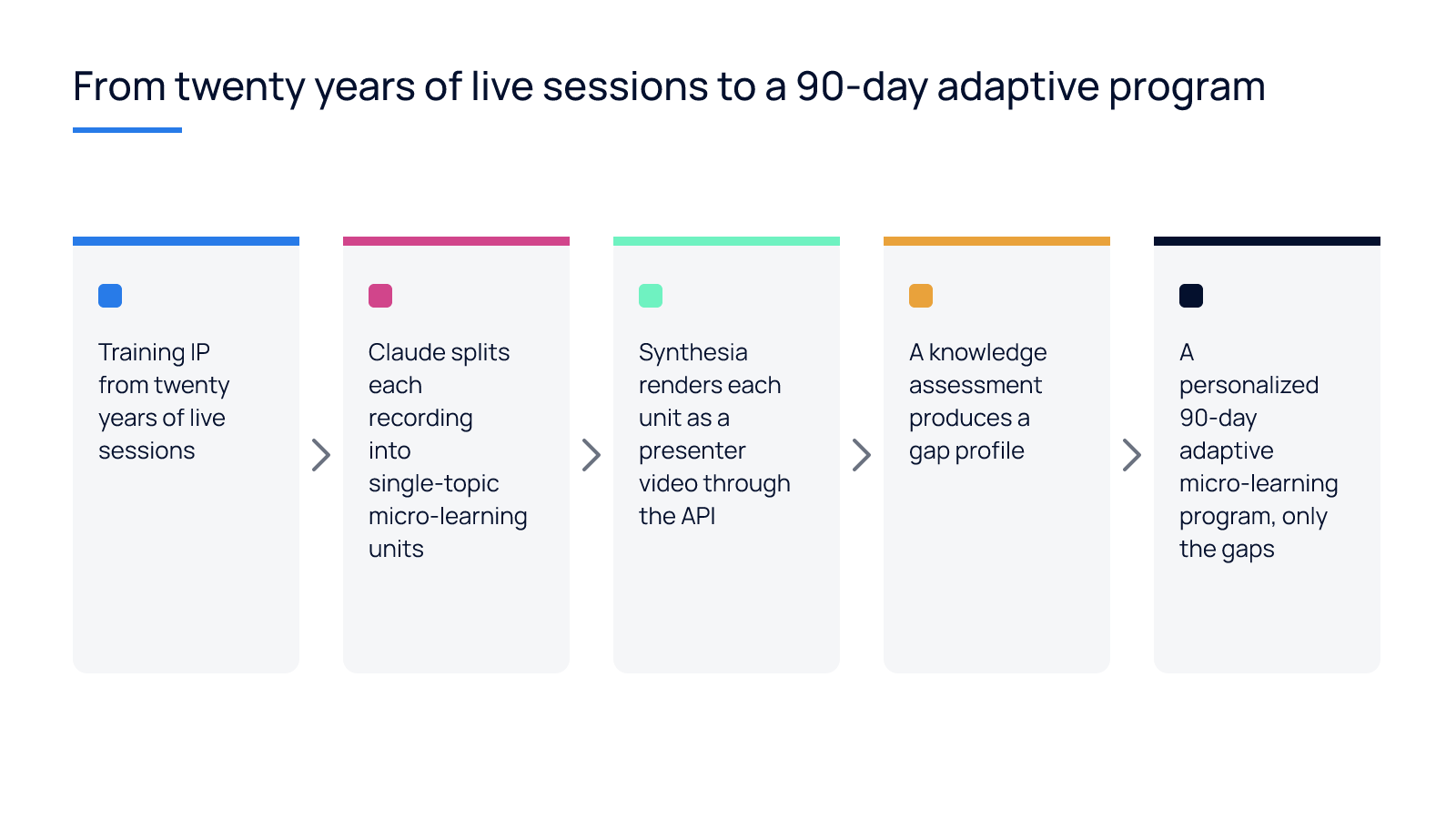
First, we connected Tracy's content pipeline to the Synthesia API so video generates at scale without a studio or a presenter. She feeds in the training IP she already owns from twenty years of live sessions. Claude splits each recording into small, single-topic micro-learning units, each with a deck and speaker notes on brand. Synthesia renders each unit as a presenter video through the API. The library grows without anyone booking a shoot. When a rule changes, you regenerate the affected units instead of re-recording them. That is the point that matters for payroll: the content keeps up, because refreshing it costs tokens, not days.
One detail Tracy cared about, and she was right to: the presenter had to sound Australian and had to sound real. A payroll audience in Sydney will not trust a generic synthetic voice reading local law. She found an Aussie avatar that genuinely holds up. Trust is a sales issue in this market, not a nice-to-have.
Second, we ran a private build retreat in Ho Chi Minh City. Tracy flew in, and instead of watching a demo, she built alongside our team for the week. This is where Payroll IQ stopped being a content library and became a product. The Friday goal was specific: a learner signs up, takes a knowledge assessment, and gets a gap profile of what they do not already know. From that profile, the platform assembles a personalized 90-day adaptive micro-learning program containing only the gaps, delivered as short videos across a working week. Never re-teach the hours the learner already has.
Tracy said two things that framed the whole week. "Build product to sell, not slides to show." And, on the goal: "if the app is working Friday, 100% satisfied." Her honest weak point going in was not the vision or the pipeline, both of which she had built solo and self-taught. It was the finish. In her words: "it just looks ugly." So part of the week was lifting the interface to a standard you can charge for.
Where the leverage actually lives
Here is the part I want expert founders to sit with. The AI did not replace Tracy. It replaced the mountain of hours between her expertise and a shippable product.
The synthetic video is not the product. The judgment is. Which topics matter. What a payroll professional actually needs in 2026 versus what is safe to strip out. Which rules are too sensitive to self-test, like the long service leave calculator that still needs a human subject matter expert to validate. That is the half no model owns, and it is precisely the half Tracy is worth paying for. The 233 million agent tokens bought back her hours so she could spend them on the judgment instead of the editing timeline.
That is the trade. A stack of AI tokens for a mountain of human hours, leaving the humans to own the curriculum and the trust. It is what lets a small team run a real product where a solo founder could only run an idea.
The objection: won't a synthetic library feel cheap?
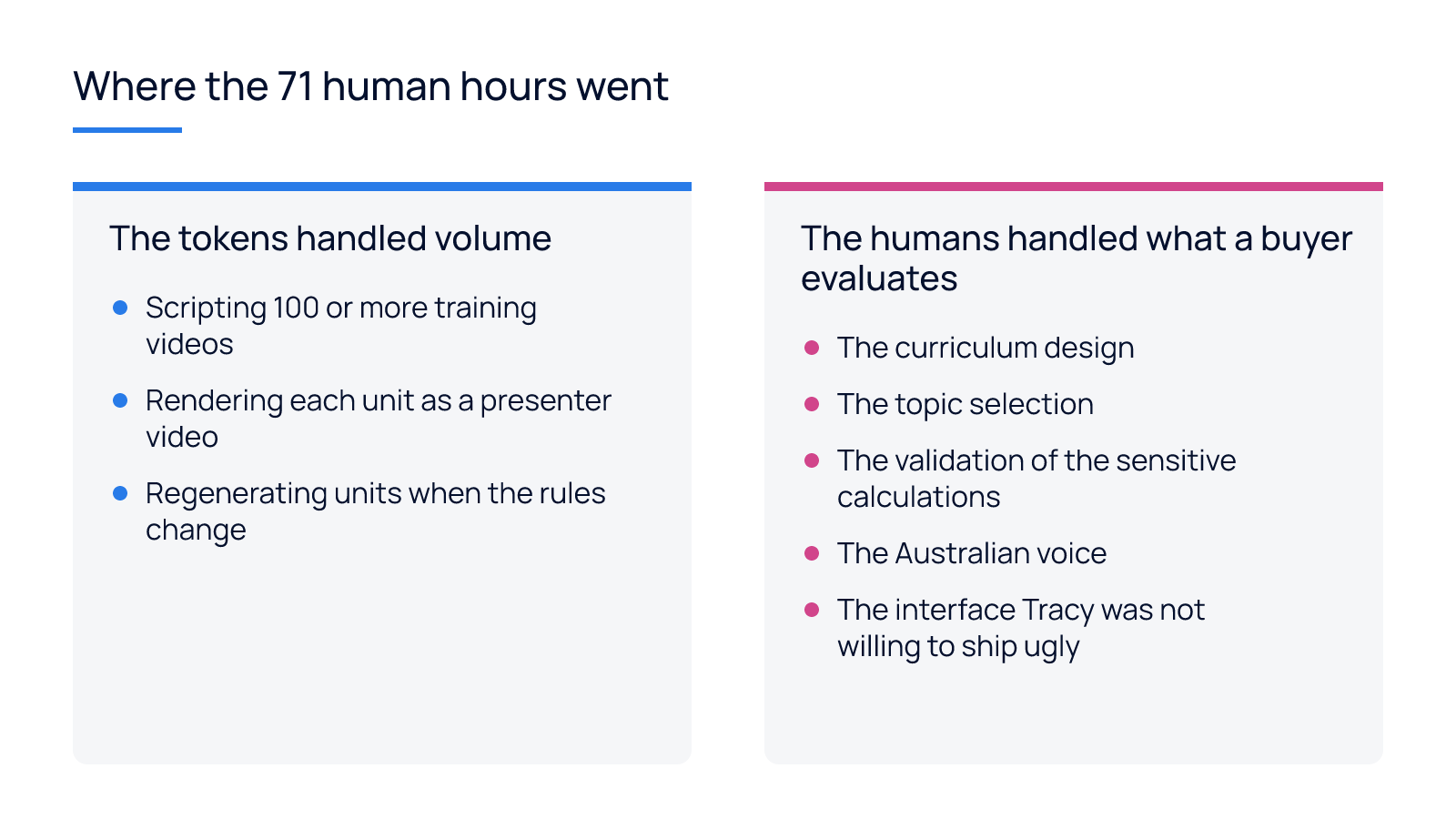
The fear I hear from experts is that AI-generated video reads as generic, and that customers will smell it. Fair. But look at where the 71 human hours went. Not into cranking out clips. Into the curriculum design, the topic selection, the validation of the sensitive calculations, the Australian voice, and the interface Tracy was not willing to ship ugly. The tokens handled volume. The humans handled everything a buyer actually evaluates before they trust the content.
That is the difference between a content dump and a product. A dump is a thousand videos nobody asked for. A product is a 90-day plan that skips what the learner already knows and gets the payroll rules right. The tokens make the first possible. The human hours make the second worth paying for.
The lesson if you are sitting on expertise
If you have a course, a body of IP, or years of content in your head and you have assumed you cannot productize it alone, that assumption was probably correct two years ago. It is wrong now.
But do not start by picking a tool. Synthesia is a means in this story, not the moral. Start by adding up your own token bill: what would it actually cost, in human hours, to produce your product and keep it current? The moment you can see that number, you can see which hours AI should absorb and which hours are the judgment you should never hand off.
That is the exact question to answer before you build, and it is what a private Edge8 build week turns into a working product.
Reply to talk about the AI roles you actually need, or book an AI audit before you hire, and we will find the leverage hiding in your own content business.
See the whole engagement, from the first retreat to the member launch, in the Payroll IQ case study.
FAQ## FAQ
How much does it cost to turn expertise into a product with AI?
For Payroll IQ, about 233 million agent tokens against 71 hours of human direction and review, roughly 3.3 million agent tokens per human hour. The tokens did the volume; the humans did the judgment and the sign-off.
What is a human token?
A human token is one hour of skilled human work. It is the scarce input, because you cannot buy more hours in a day. On Payroll IQ that scarce input came to 71 hours of direction and review, which is the number that tells you whether a solo founder can actually ship.
Does AI cut the human hours needed to build a product?
Yes, dramatically. Payroll IQ took 71 human hours of direction and review while agents generated 233 million tokens doing the volume work. The AI did not replace the expert, it replaced the mountain of hours between her expertise and a shippable product.
What do humans still do when AI builds the product?
Judgment, not editing timelines. The 71 human hours went to deciding which topics matter, what to strip out, and which rules are too sensitive to self-test and still need an expert to validate. That is the half no model owns, and it is precisely the half worth paying for.
How do I estimate the AI token cost of my own product?
Start by adding up what it would cost in human hours to produce your product and keep it current, then look at how much of that AI tokens can absorb. On Payroll IQ, 233 million agent tokens compressed against 71 human hours, but the ratio for your business depends on where your judgment lives.