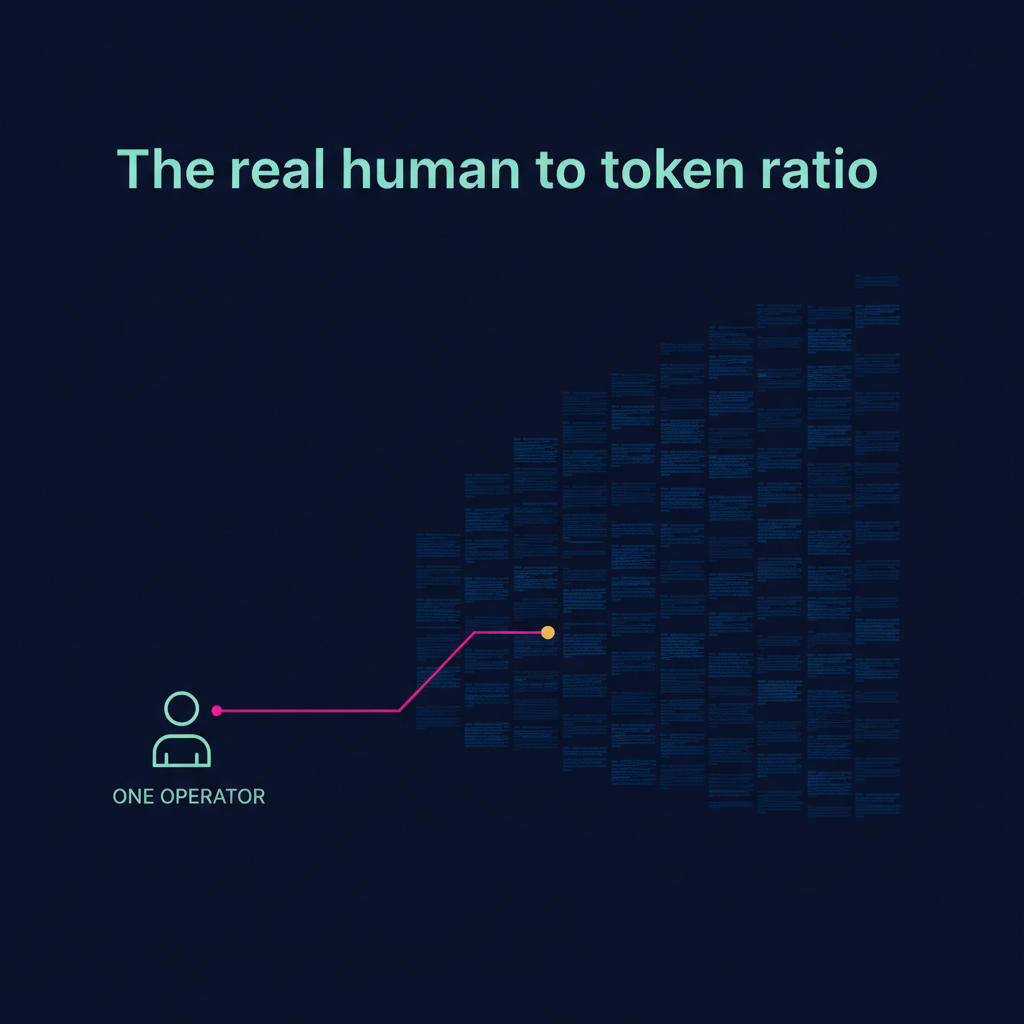
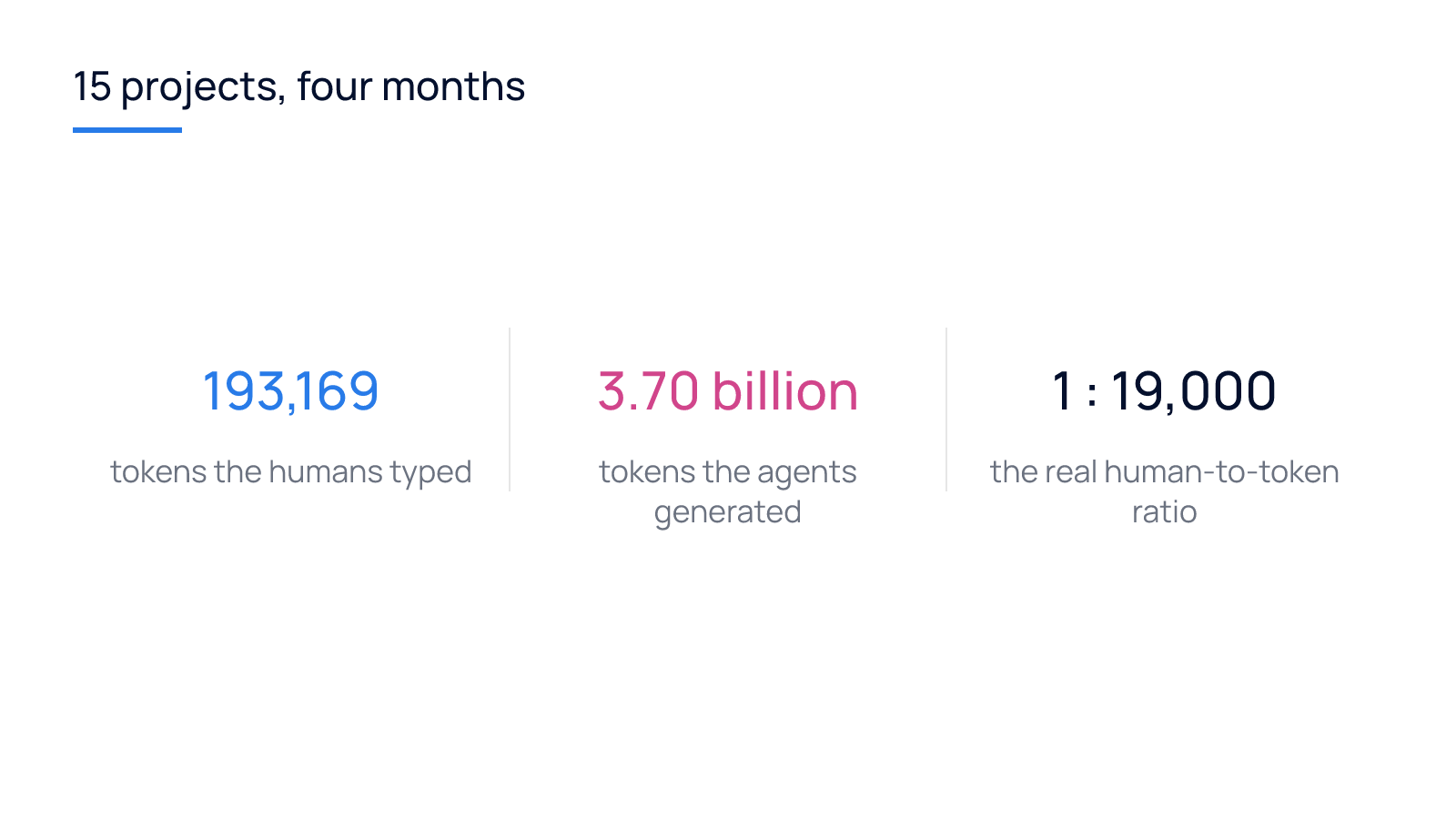
Over four months, across 15 real projects, our AI agents generated 3.70 billion tokens. In the same window, the humans directing them typed 193,169 tokens. That is roughly one human token for every 19,000 agent tokens. If you have ever wondered how much code can AI write when a skilled operator points it in the right direction, that ratio is your answer, and it is bigger than most founders think.
A few years ago, standing up a real internal operating system meant one thing: hire engineers. Then more engineers to manage them. Then DevOps to keep it running. The system arrived eventually, over budget and six months late, and it mostly did what you asked. Mostly.
I have spent the last stretch of my career trying to break that math. Not by hiring faster. By changing what the humans are actually for.
The Edge8 operating system, the software that runs our entire company, was built primarily by one operator directing AI, with engineers brought in only to harden and secure it. Not to write the first version. To make the finished thing safe. That gap, between what I used to need and what I actually needed, is the real human-to-token ratio.
The unlock was never the coding
Let me be honest about what the Edge8 OS is, because the honesty is the whole point.
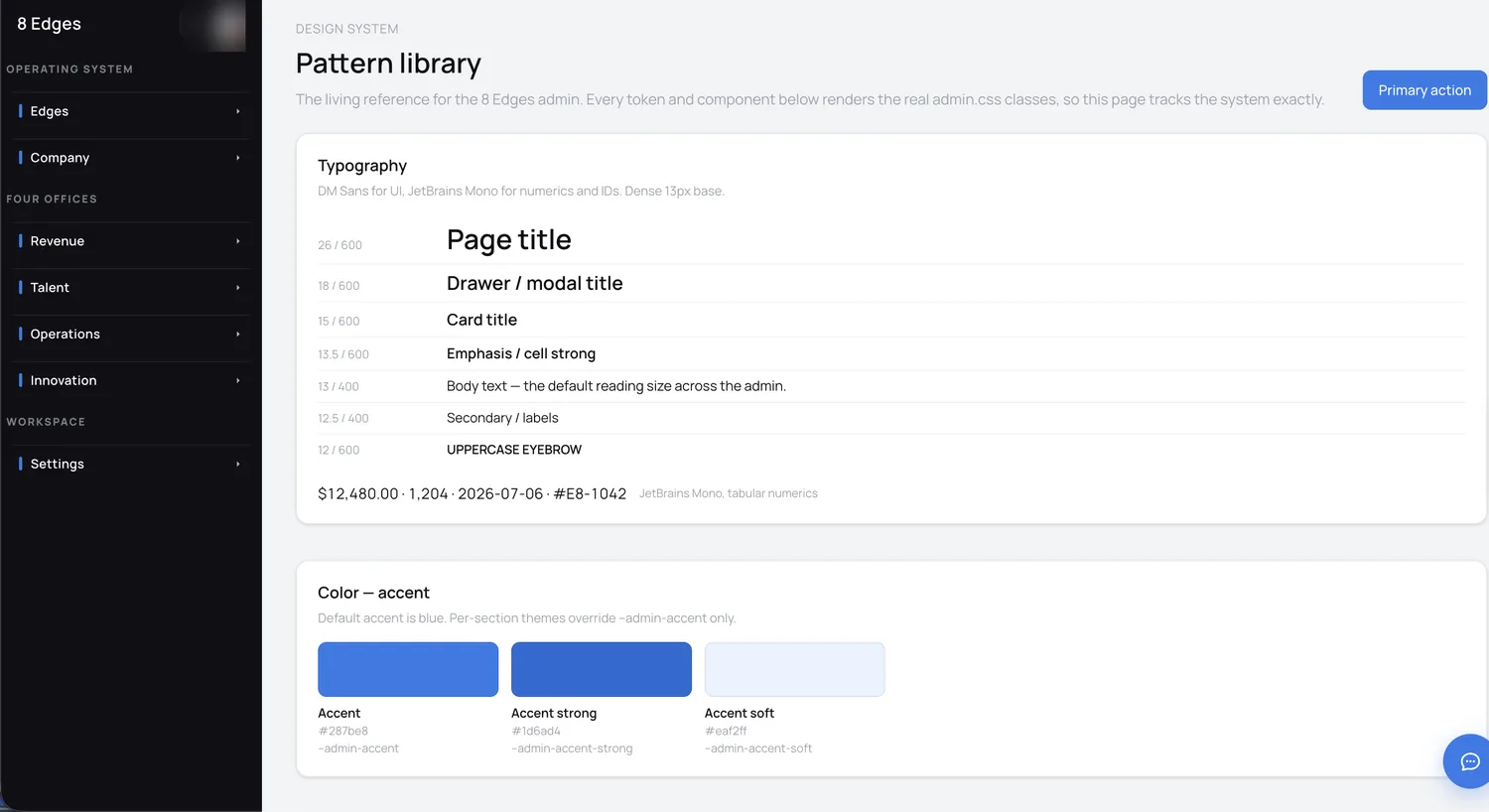
It is not a toy. It runs our CRM (the system that tracks every lead and customer). It runs our applicant tracking, our client portals, our task boards. It reads sales call transcripts and scores them. It runs a marketing and email engine with consent handling. It tracks our equipment fleet. Feature after feature, all built the new way.
And what made that possible was not the code. It was the workflow design.
I knew exactly how a lead should move to a deal. I knew how a call transcript should turn into an updated CRM record and a live proposal in minutes. I knew what a client should see in their portal and what they should never see. The thinking, the sequencing, the rules, the edge cases: that was the work. The building was downstream of it.
Most software does not fail because the code is sloppy. It fails because nobody designed the workflow it was supposed to serve. I inverted that. I spent my scarce hours on the design and let AI spend its abundant tokens on the build. When people ask what changed, that inversion is the whole story.
There is a unit behind all of this. We call it the human token: one hour of leveraged human effort, the kind where you are directing four or more workstreams at once, not typing one line at a time.
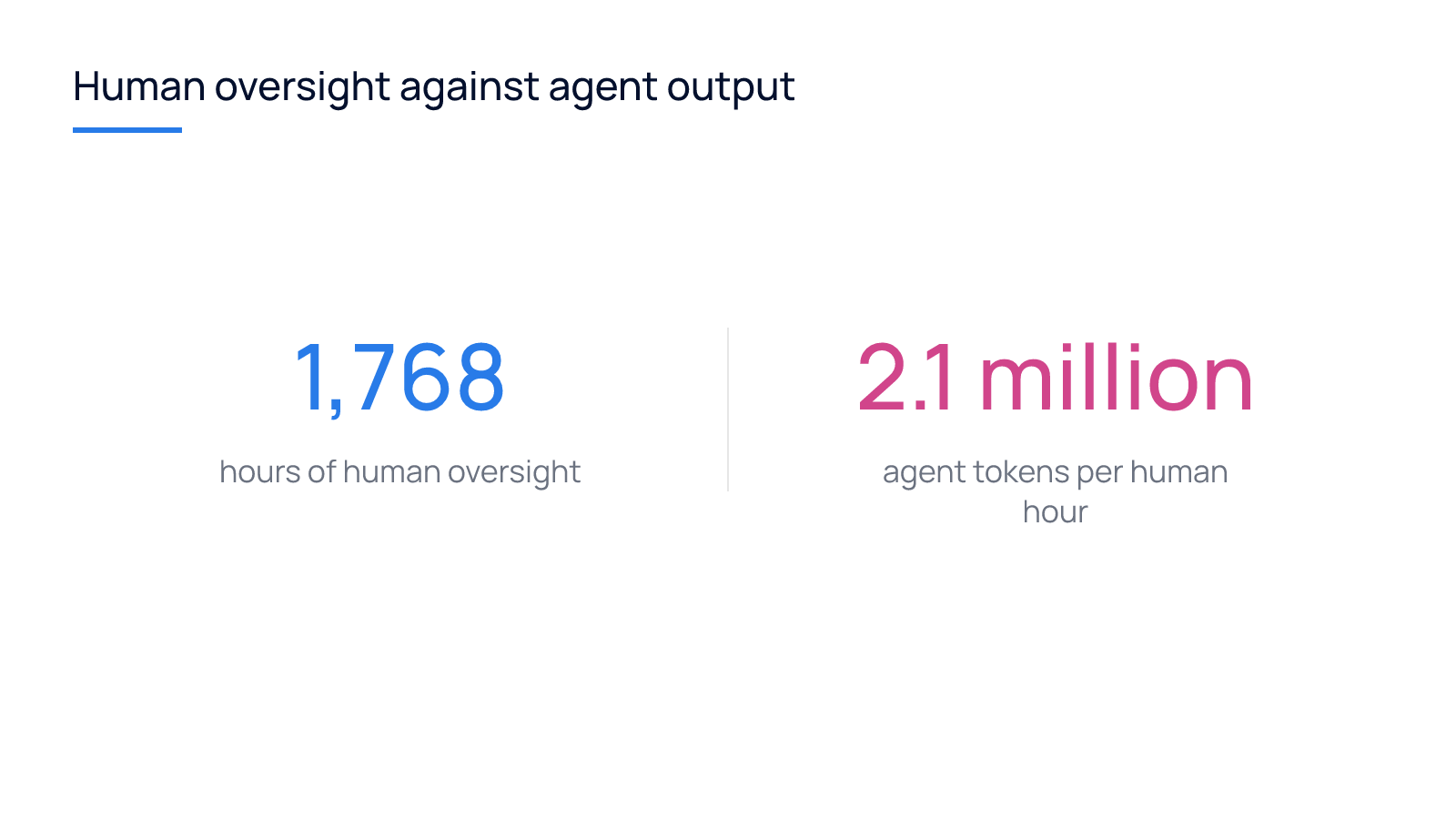
The measurement that matters is the ratio. Over those 15 projects, we logged 1,768 hours of human oversight against 3.70 billion agent tokens. That works out to about 2.1 million agent tokens per human hour. That is the honest answer to how much code can AI write when a skilled operator is steering: not a productivity tweak, a different category of leverage.
Sit with that number for a second. 2.1 million tokens an hour is not a person typing faster. It is a person setting direction while the machine produces output at a scale no team of typists could match. The bottleneck moved. It used to be how fast engineers could write. Now it is how clearly one person can think about what should be built.
It was never the AI. It was the thinking. AI scales insight. It does not produce it. The founder who wins here is not the one who adopts AI fastest. It is the one who does the hard design work and then multiplies it.
AI-built is not done
Here is the part most AI case studies skip, and skipping it is exactly why they are not credible.
AI-built does not mean finished. The Edge8 OS operates the way I want, but that is a statement about behavior, not about security, not about hardening, not about the thousand quiet failure modes a production system has to survive. A demo that works when you drive it the right way is not the same as a system that holds up when a real user does something you never imagined, when a request comes in malformed, when an integration times out, when someone tries to see data they should not.
That work is real engineering, and it is where we are now. Engineers are going through the codebase to harden it, secure it, and make it robust for the long haul.
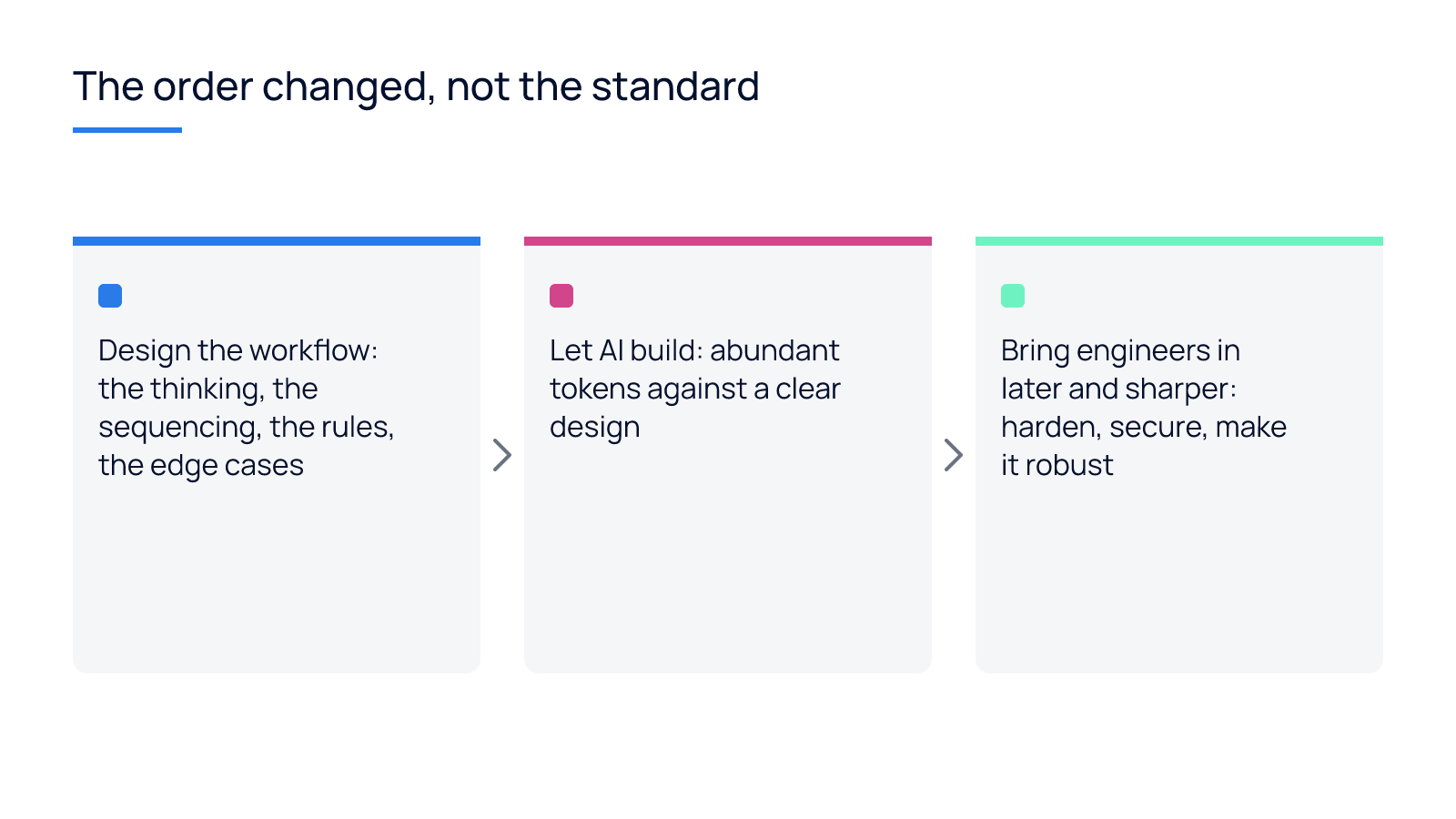
That is not a weakness of the approach. It is the approach. One workflow designer plus a few engineers to harden is a fundamentally different team than the army I used to think I needed. The engineers are not there to build the thing. They are there to make the thing safe. A smaller, sharper role, and it starts much later.
Why the objections do not hold up
When I lay this out for other founders, I hear the same pushback, so let me answer it head on.
"This only works for small internal tools." It runs our entire company: sales, hiring, client delivery, marketing, equipment. That is not a weekend script. That is the operating layer of a business.
"You just got lucky on one project." We did not do this once. We used the same method to build the AI Officer Institute platform. Two very different products, one method. That is the tell that this is repeatable, not a fluke.
"Skipping engineers up front will bite you later." It would, if we skipped them entirely. We do not. We bring them in for exactly the part they are best at: hardening, security, robustness. The order changed, not the standard.
"Anyone can do this now." No. The ratio is only real if the person steering knows the business cold and has enough technical judgment to design the process and stay the editor. Point a machine at a vague idea and you get 3.70 billion tokens of confused output. The design is still the hard part.
What this means if you are a founder
If you believe you need a whole engineering team before you can build your internal systems, I want to challenge that directly. You need a workflow designer, which might be you, and a few engineers to harden what gets built. Not an army. Not six months.
The rare combination that makes this work is business fluency plus enough technical judgment to design the process and stay the editor. If you have that, AI is the multiplier. If you do not, that is a role you staff, and staffing it correctly is the difference between the ratio working for you and burning tokens on the wrong thing.
Think about what that does to your budget and your timeline. The old model front-loaded a large, expensive team and hoped the workflow revealed itself in the code. The new model front-loads the thinking, lets the machine build, then brings in the sharp, small engineering role at the end to make it safe. Cheaper, faster, and honestly better software, because it was designed before it was built.
That is exactly the small, sharp team Edge8 staffs. Reply to talk about the roles you actually need, or book an AI audit before you hire.
For a real product built this way, read the Payroll IQ case study: 486 pull requests, 233 million agent tokens and 71 human hours.
FAQ## FAQ
How much code can AI write compared to a human?
Across 15 projects tracked from 15 April to 19 August 2026, humans typed 193,169 tokens of instruction and judgment while Claude agents generated 3.70 billion, a ratio of roughly 1 to 19,000. Humans supply the scarce thinking, AI supplies the abundant building.
How much human oversight does AI-built software actually require?
Across the 15 projects we logged 1,768 hours of human oversight in total, which works out to about 2.1 million agent tokens per human hour. That is not passive supervision. It is a person directing the workflow, reviewing pull requests, and staying the editor on every decision that matters.
If AI writes almost all the code, why hire engineers at all?
Because AI-built is not the same as finished. The system operates the way you designed it, but security, hardening, and the thousand quiet failure modes of production are real engineering work. Engineers come in later and sharper: not to build the thing, but to make it safe. Even when agents generated 3.70 billion tokens across 15 projects, the work took 1,768 hours of human oversight.
Why does human thinking matter if AI writes most of the code?
Because the thinking is the product. AI scales insight, it does not produce it, so the 193,169 tokens of human instruction across these projects carried the design, the sequencing, and the edge cases that the 3.70 billion agent tokens were built against. Spend your scarce hours on the design and let AI spend its abundant tokens on the build.
Can an AI-first build method be repeated on a different product?
It is repeatable. We used the same method to build the Edge8 operating system and the AI Officer Institute education platform: two very different products, one approach of designing the workflows first and letting AI build against them.