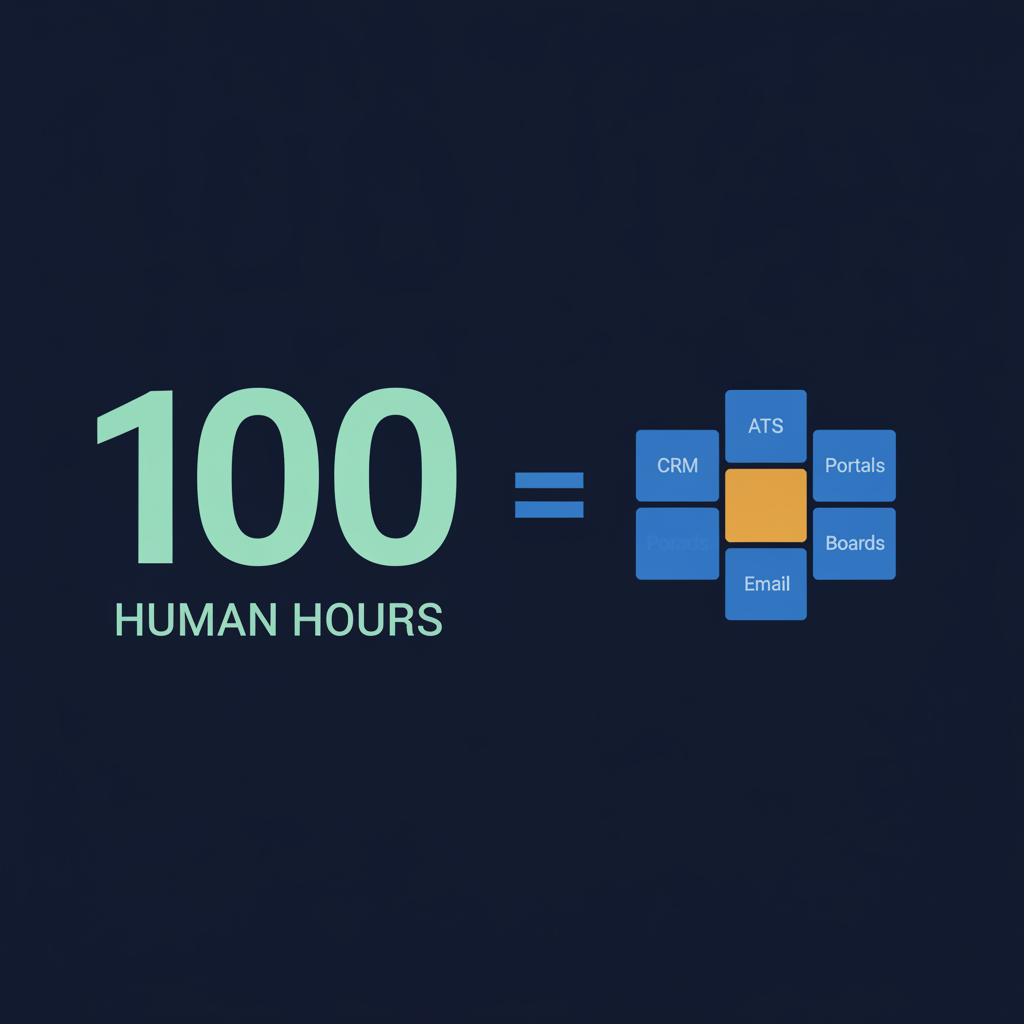
One hundred human hours. That is what it took to build the software that runs my entire company. Not one hundred hours of a team. One hundred hours of one operator directing AI, with engineers brought in at the end to harden and secure it. If you have been asking how long does it take to build software with AI, that is the honest number, and it should change how you think about your next hire.
Two years ago, the honest answer to "what would it take to build our own internal operating system" was: hire a team. A couple of engineers, someone on DevOps, a project manager to hold it together, and a runway measured in quarters. That was not pessimism. That was the going rate for a real system.
The rate has changed. The Edge8 Human Token Tracker clocked 99.75 hours of human direction to build the Edge8 web platform, the operating system that actually runs our business. Call it 100 human hours. Over that stretch, the agents burned 394 million tokens, roughly 3.95 million agent tokens per human hour. Treat those numbers as illustrative, not audited. I am not selling you a stopwatch. I am telling you the category changed. A whole product now costs about what a single feature used to cost. Once you have felt that, you cannot un-feel it.
What 100 human hours actually bought
This is not a demo sitting in a sandbox somewhere. It runs the business day to day, and it does not get a day off.
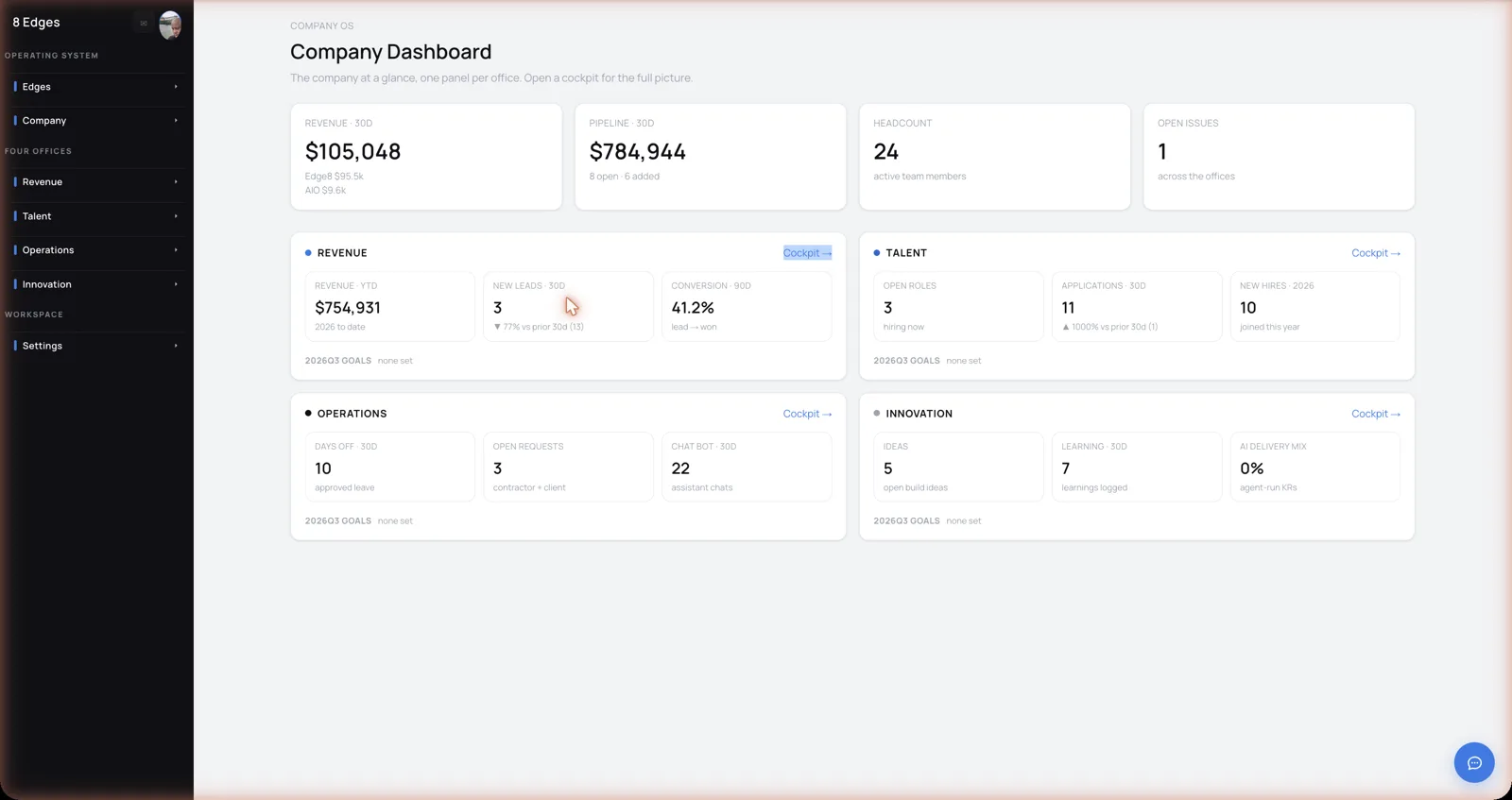
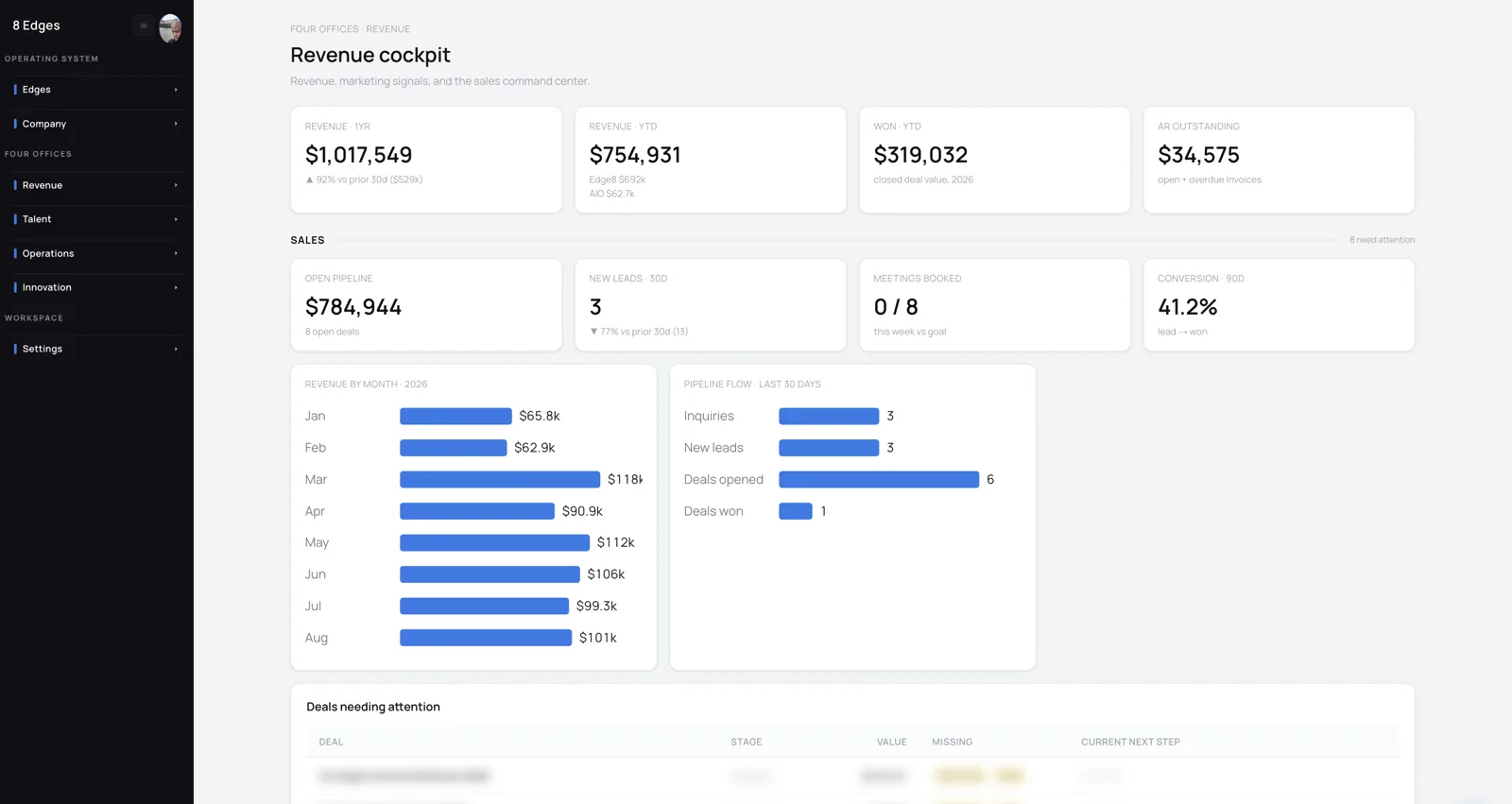
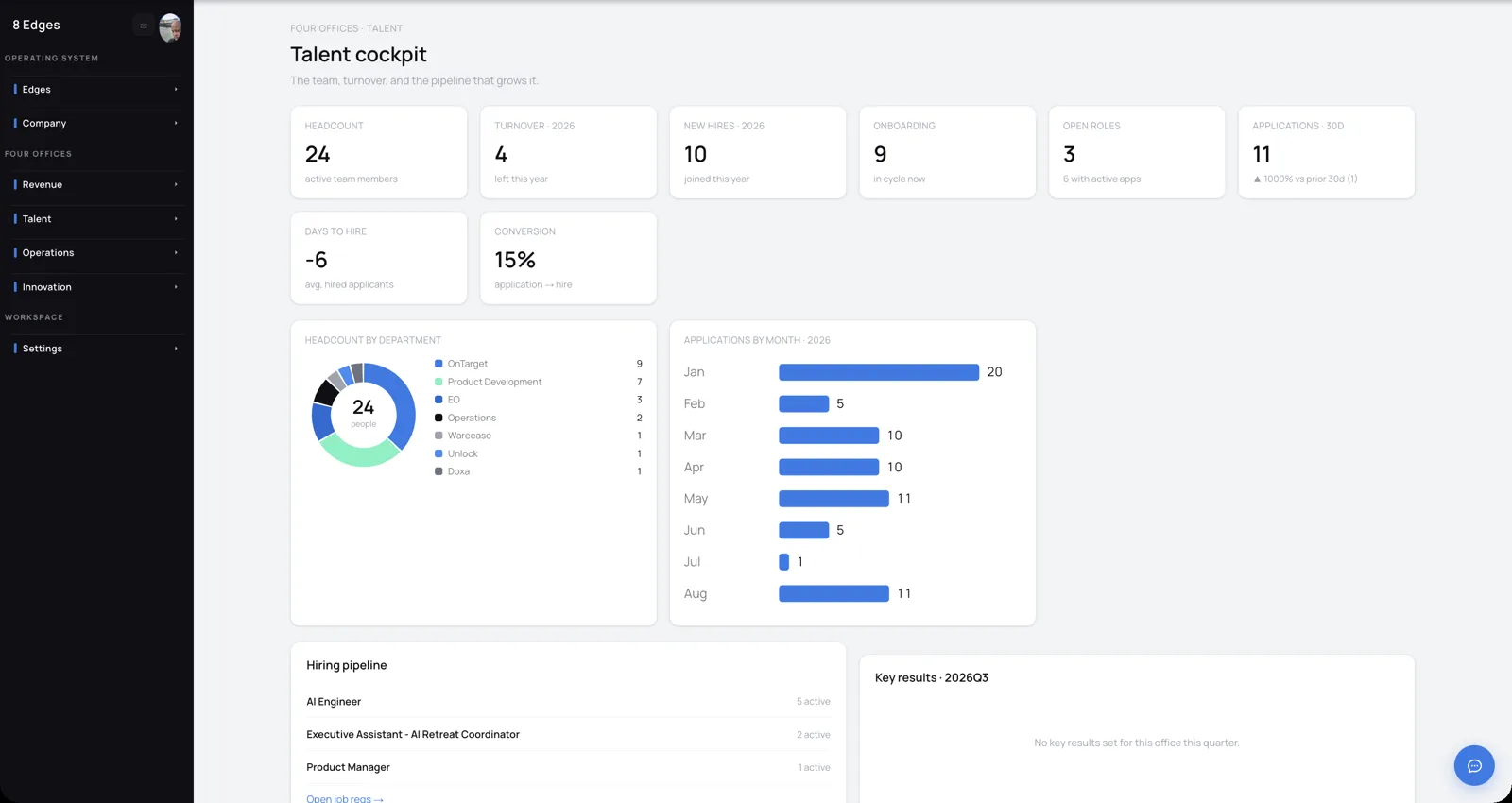
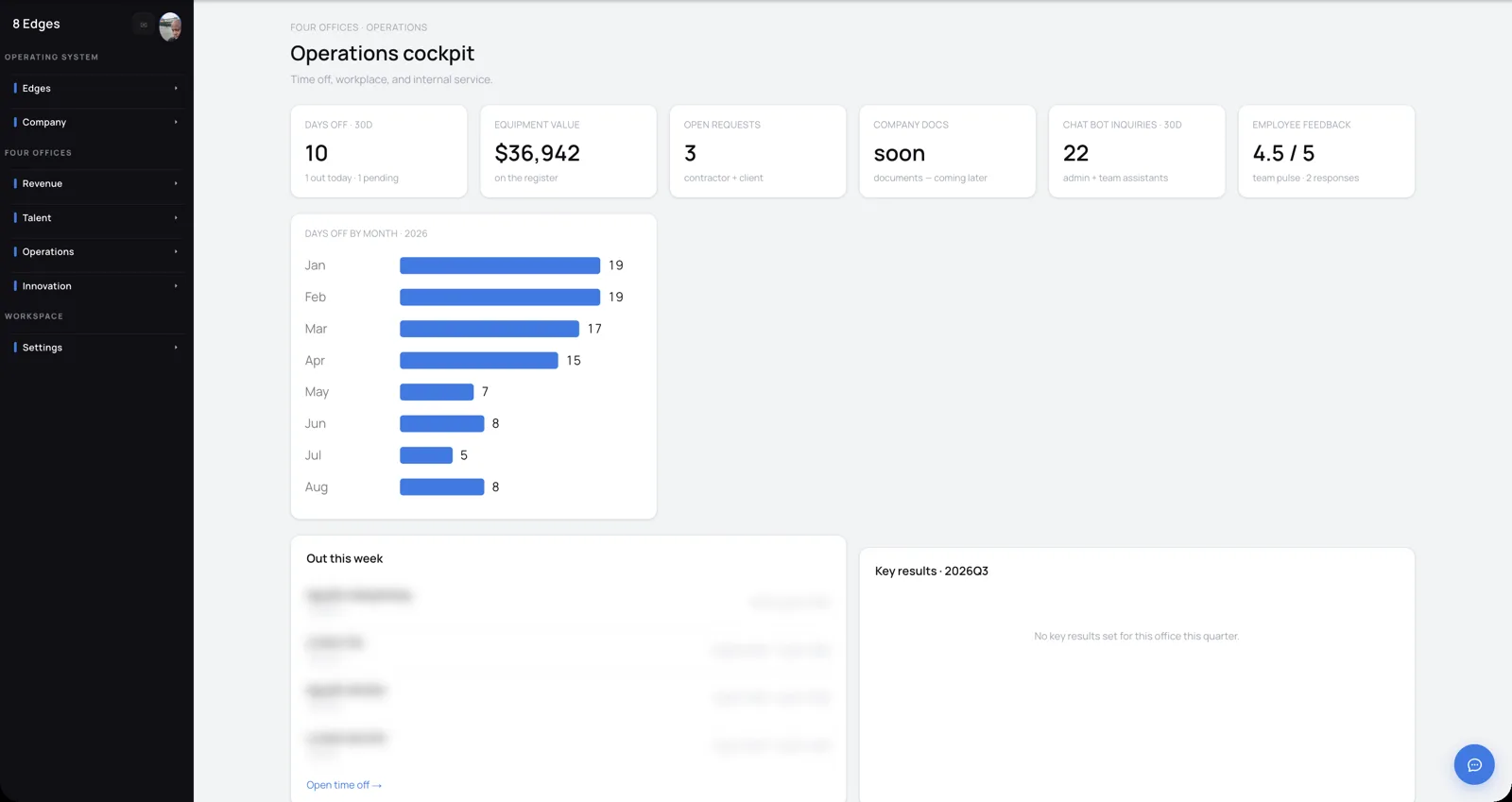
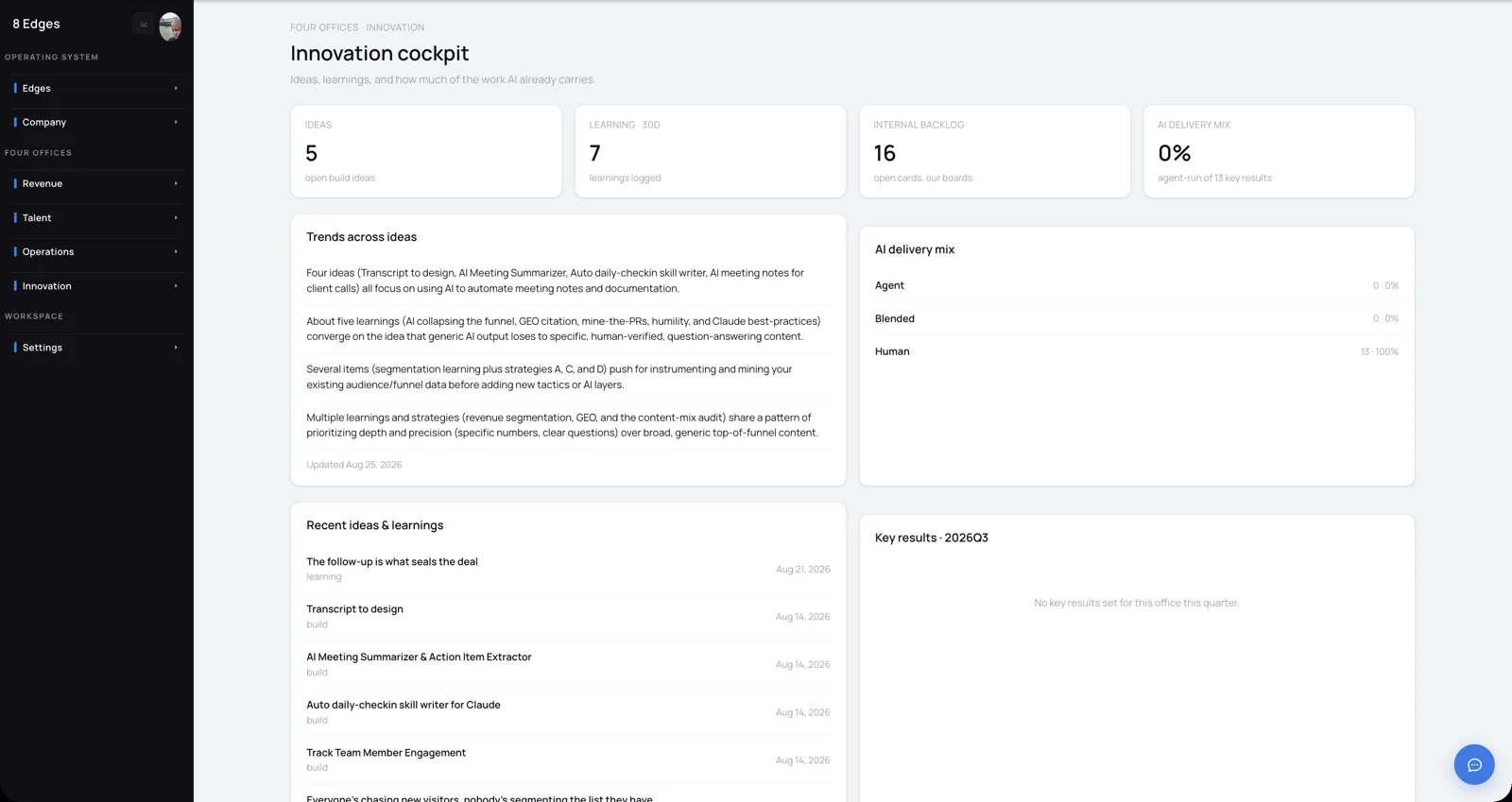
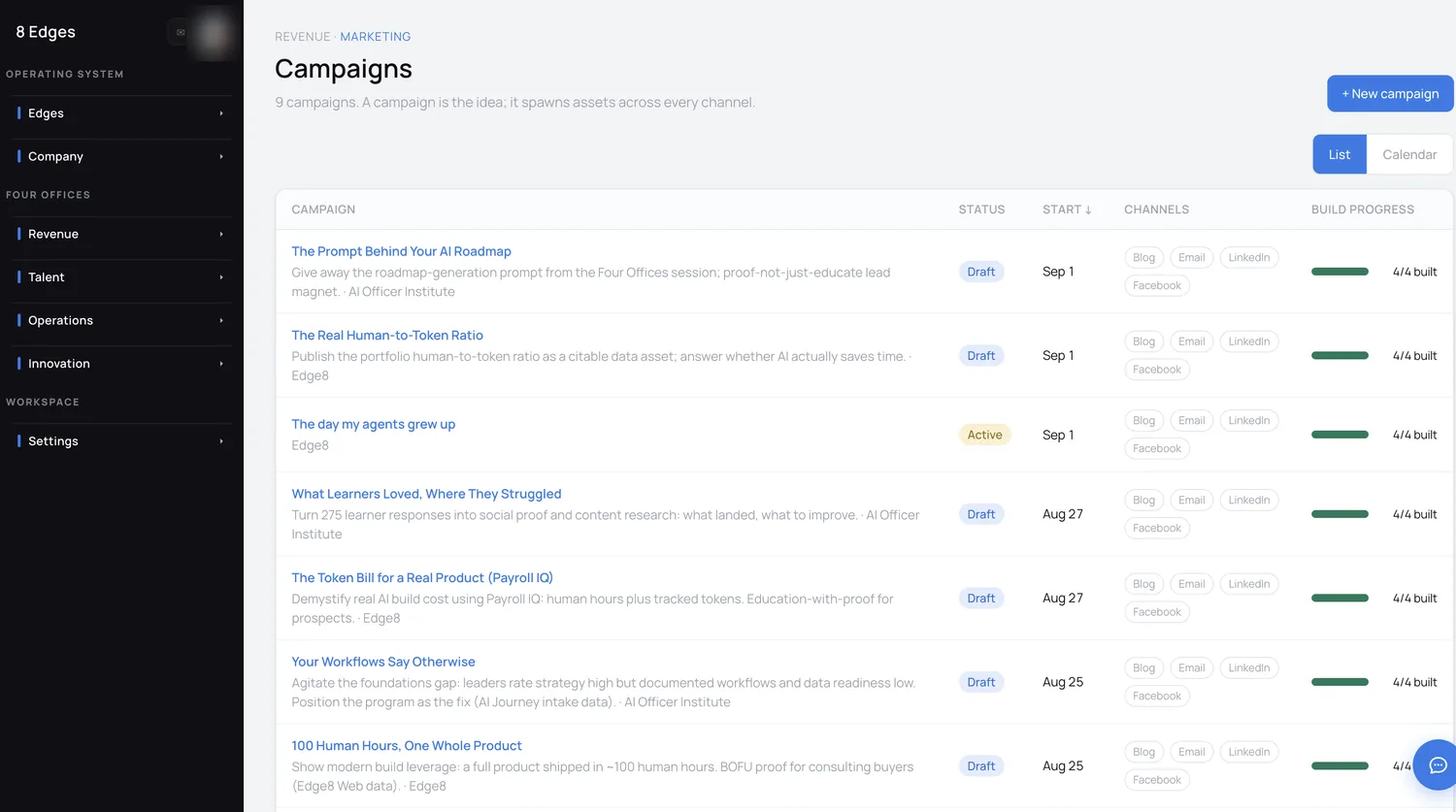
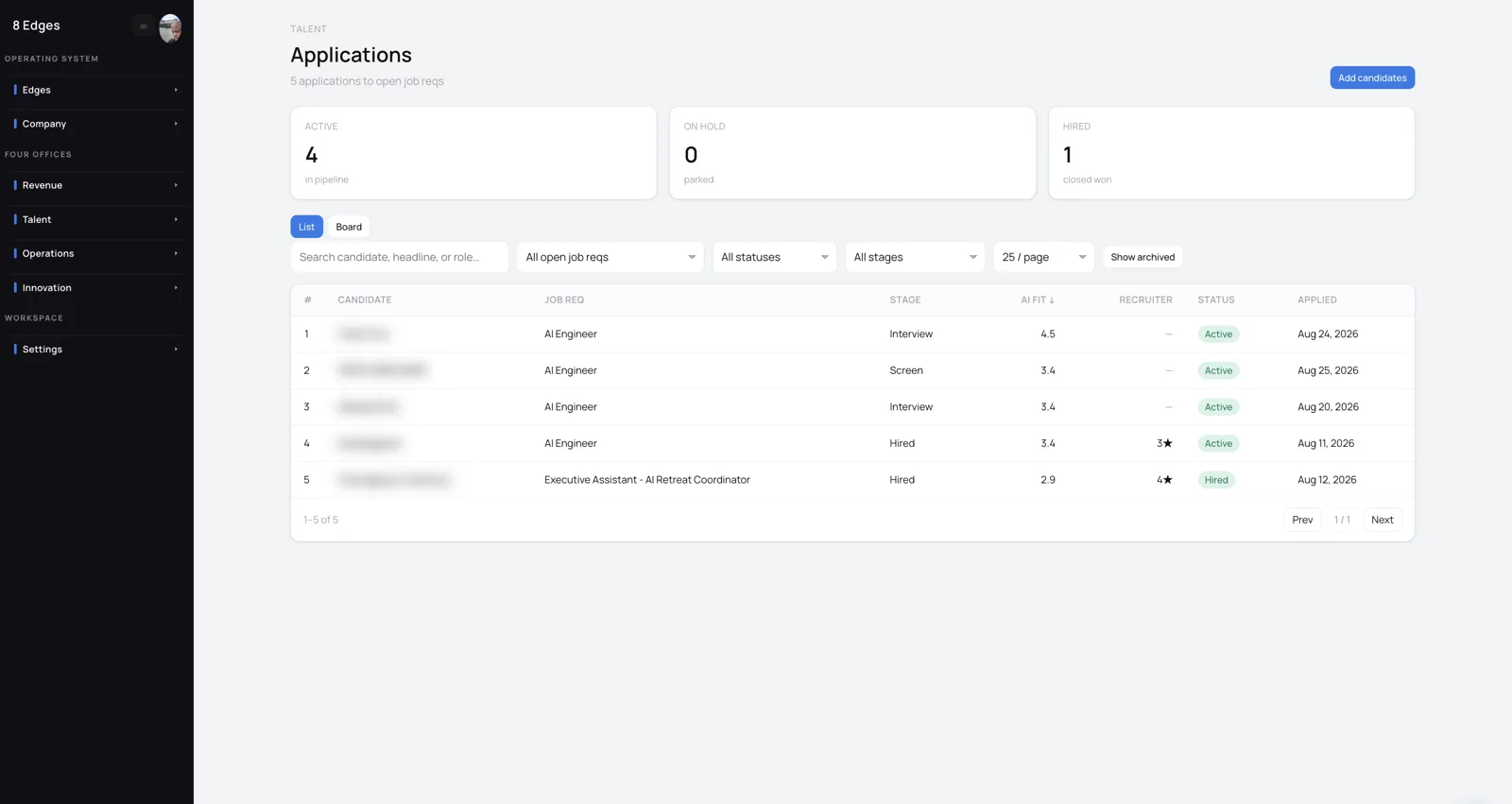
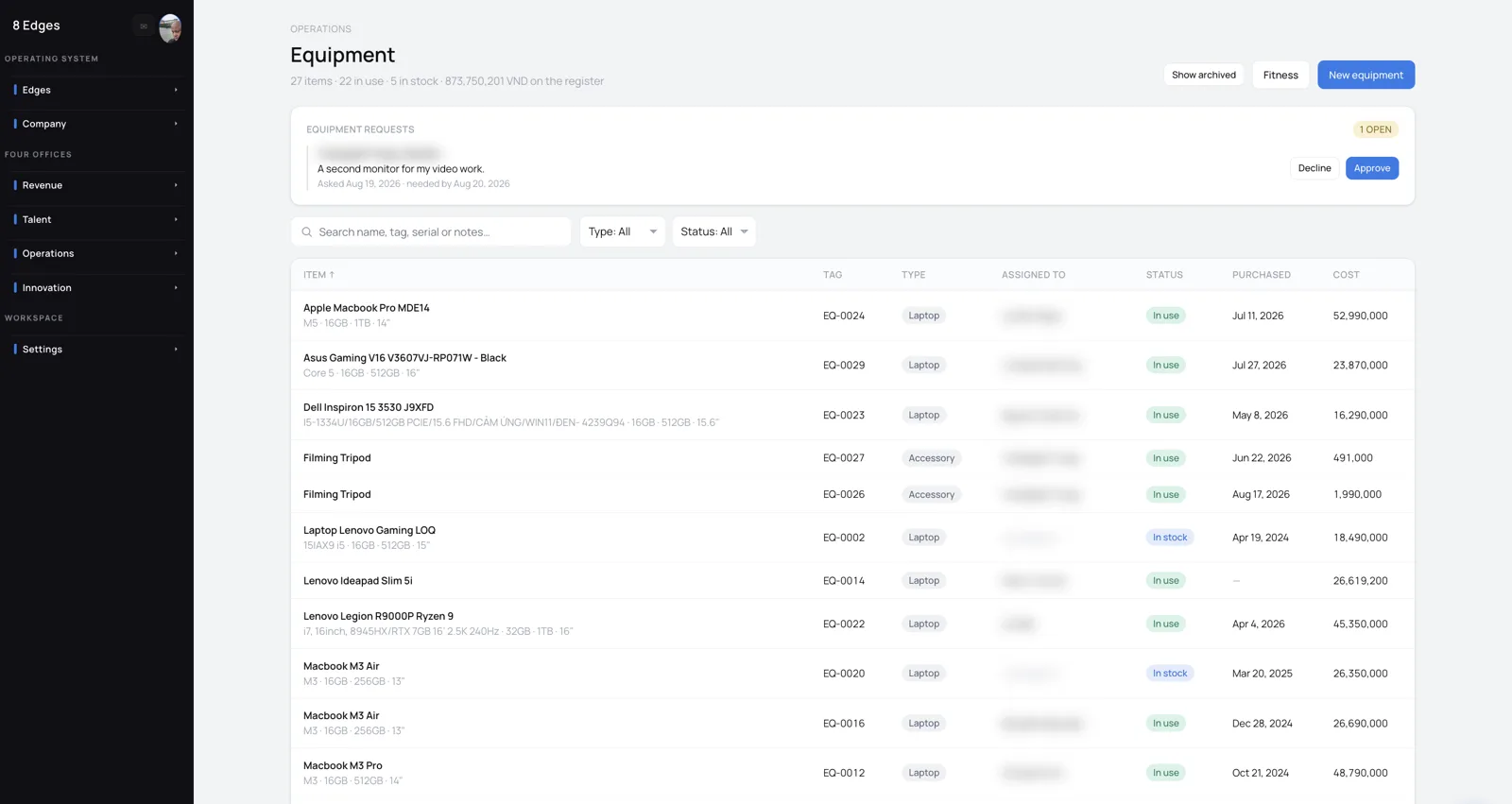
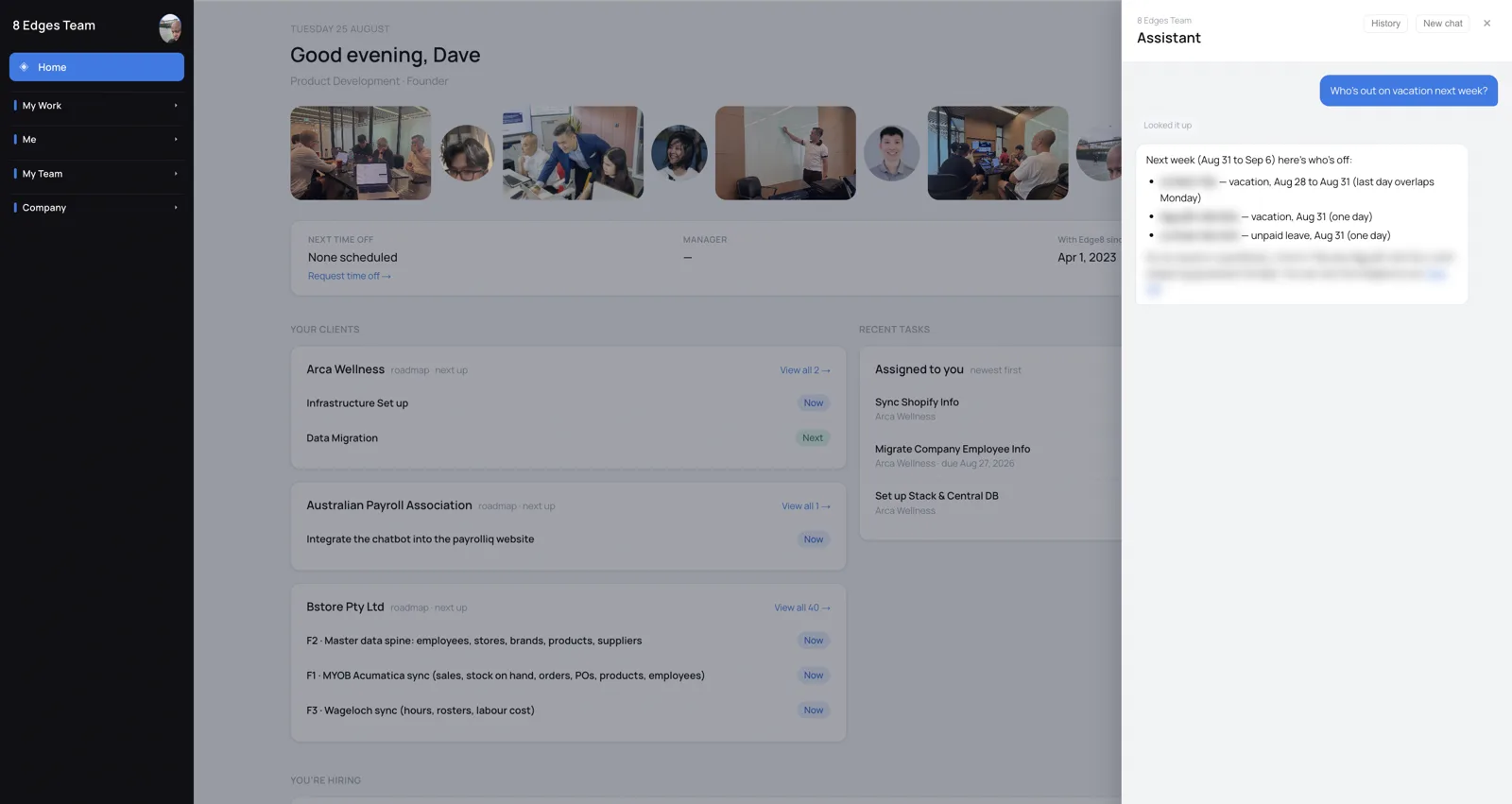
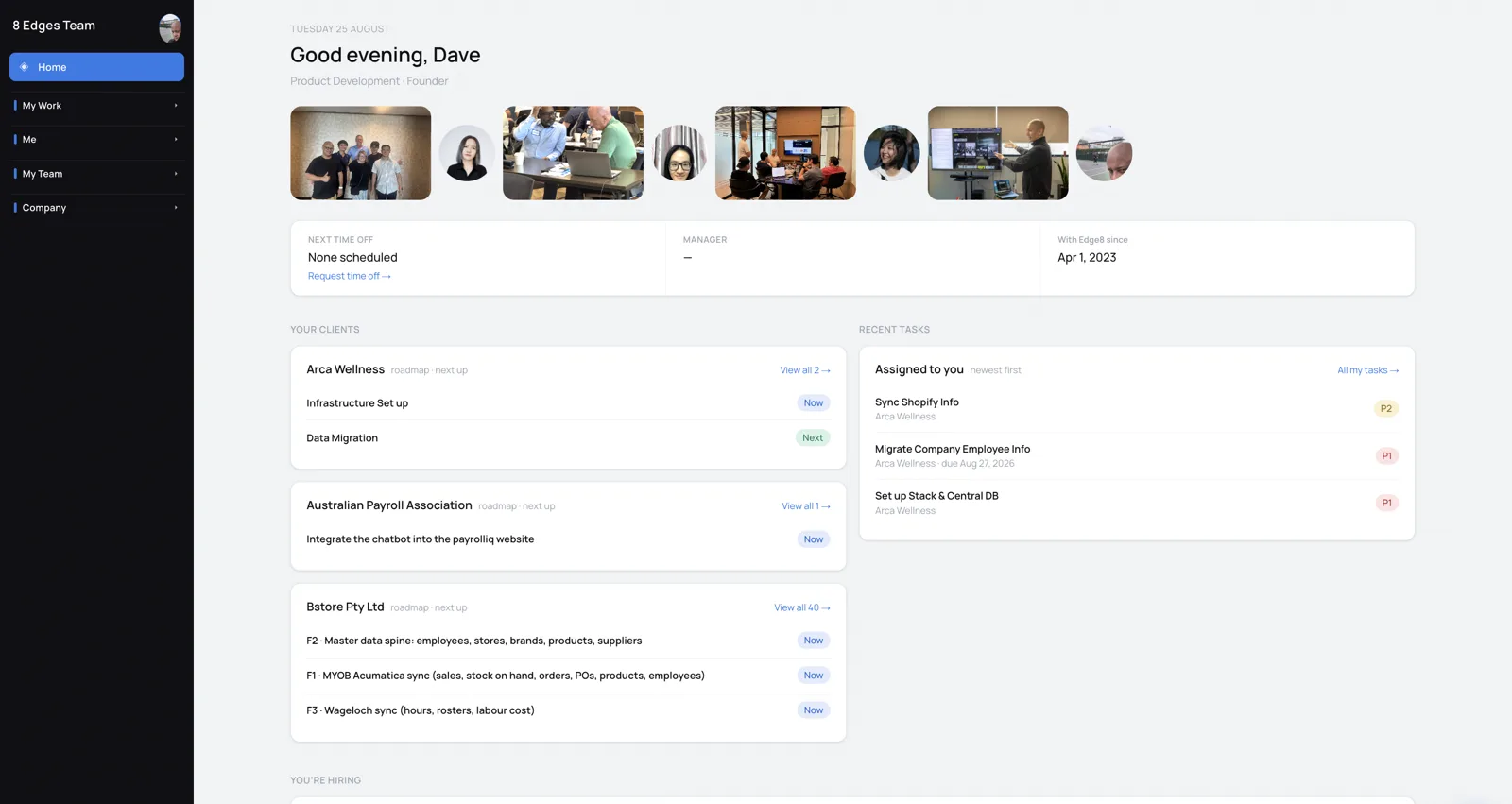
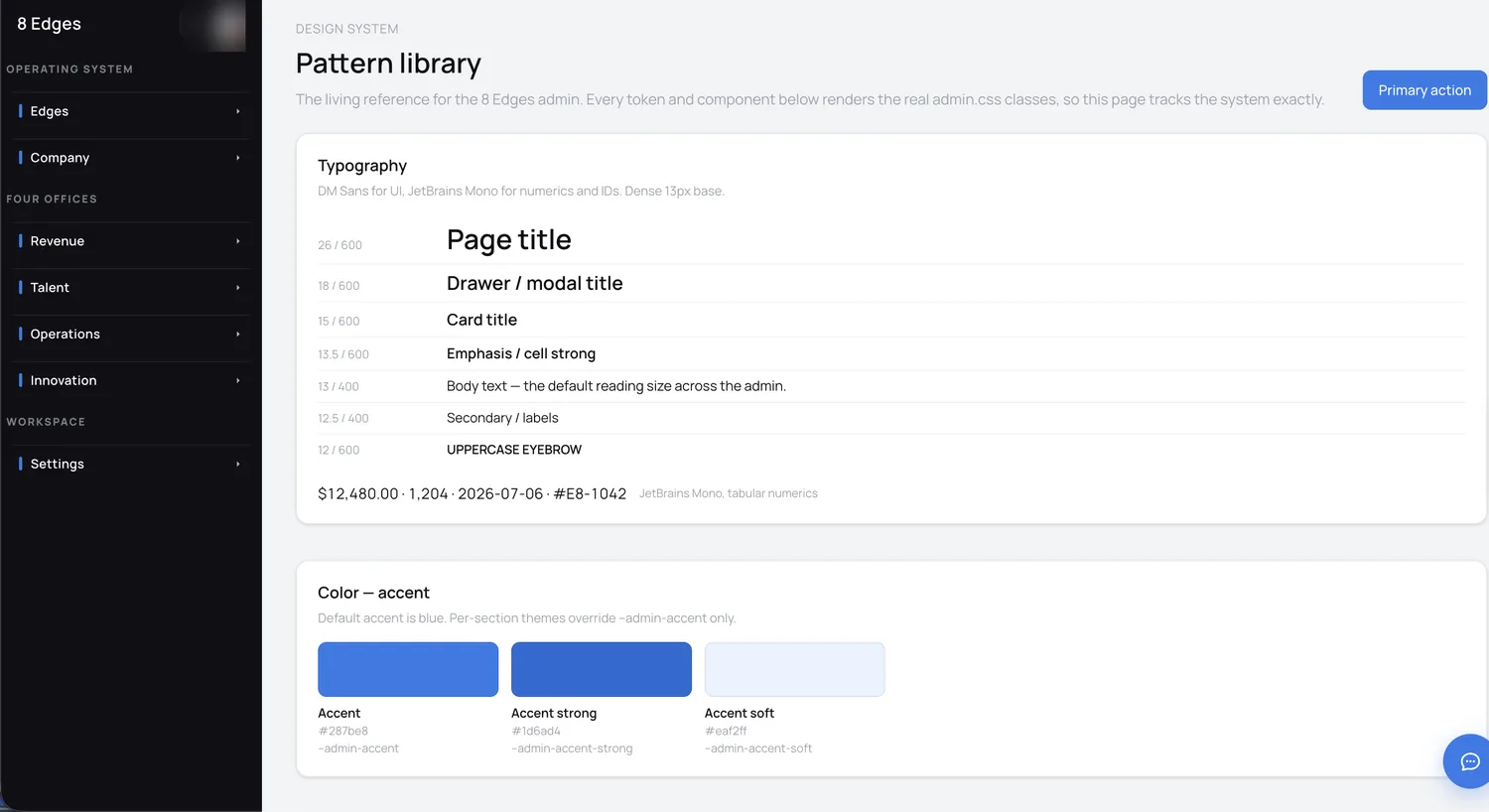
Here is the actual scope. A CRM organized around the four offices we operate in: Revenue, Talent, Operations, and Innovation. Applicant tracking with interview scorecards. Client portals. Task boards tied to client roadmaps. Sales intelligence that scores our own call transcripts. A marketing and email engine with real consent handling and batched sending. Equipment and fleet tracking. Coaching tools for the team.
That is not a to-do app. That is the connective tissue of a staffing and advisory firm. Quote me that scope in 2023 and I would have budgeted six figures and half a year, and I would have been right for the era. It was neither. That gap between what I expected to pay and what it actually took is the whole story.
The real answer to how long does it take to build software with AI
Here is the part most people get backwards. They think the leverage came from AI writing code fast. It did not. The leverage came from me doing the thinking first.
Before AI wrote a line, I designed the workflow. What is the trigger. What data comes in. What the system should do with it. Where the result lands. How I would know it ran. When the design was clear, the build was quick, because there was nothing left to figure out. The agent was not inventing the product. It was executing a decision I had already made.
When the design was fuzzy, no amount of clever prompting saved it. The AI just produced confident nonsense faster. That is the trap founders fall into when they get excited about the speed. They point a tool at a vague problem, get a working-looking result in minutes, and mistake motion for progress. Two weeks later they are debugging a system nobody actually specified.
That is why I say it is not perfect code, it is perfect process. The system operates exactly the way I want it to, because I specified exactly how the work should flow. The code underneath is not what a staff engineer would have hand-crafted, and it does not need to be to run our business correctly every day. The design was the product. The code was the output. Those 3.95 million tokens per human hour only mattered because a human hour of clear thinking pointed them somewhere useful. Bad thinking scales just as fast as good thinking, so the human hour is where the value lives.
One tip that raised the quality for free
Here is a concrete one you can steal today. When you want AI-built code to be organized and reviewable, tell the model to act as Andrej Karpathy. He has taught, publicly and clearly, how to think about software, how to structure a pull request, and how to run a code review.
Prompting the AI to work the way he describes measurably tightened the structure of our pull requests and lifted our code-review scores before a human engineer touched anything. Same tool, same operator, better instructions. The output improved because I gave the model a standard to hold itself to, not because I found some secret setting.
That matters because of where we are now. The first phase was speed: get a working system that does exactly what the business needs. The phase we are in now is rigor: engineers coming in to harden it, close security gaps, and make it production-tough.
AI-built is not the same as done, and I will not pretend otherwise. The honesty is the point. Design and build with leverage, then bring in the specialists to harden what leverage produced. Anyone who tells you the AI ships production-grade security on its own has not shipped anything that matters yet.
What this means if you are about to hire a team
If you are sizing an engineering org to build your internal tools, stop and check the assumption underneath the plan. You are probably budgeting for the old rate. You are picturing the 2023 team because that is the last time you priced this problem, and the price moved while you were not looking.
You do not need an army. You need one person who can design the workflows and lead the AI, and a small number of engineers to harden and secure what gets built. That is a different shape of team, at a fraction of the cost, and it ships faster. The org chart you were about to draw was solving a scarcity that no longer exists.
The scarce input was never the code. It was the hour of clear human thinking that told the AI what to build. Hire for that first. Everything downstream is cheaper than it used to be.
The next step before you spend on headcount
So here is my offer. If you have been sizing that team, reply and tell me the roles you think you need. I will tell you honestly which ones you actually do, and which ones AI has quietly made optional. That is the AI roles you actually need, not the ones the old rate assumed.
If you want the honest version before you commit a dollar to headcount, book an AI audit first. We look at what your business actually does, where AI gives you real leverage, and what shape of team fits the work in front of you. Better to size the team once, correctly, than to hire for the world as it was two years ago.
FAQ
How many human hours did it take Edge8 to build its own operating system with AI?
About 100 human hours of one operator's direction, tracked at 99.75 hours by Edge8's Human Token Tracker. Over that build, AI agents generated 394 million tokens, plus engineering time afterward to harden and secure the system. Treat the number as illustrative, not audited: the point is that a whole product now costs about what a single feature used to.
How many agent tokens did the build consume per human hour?
Roughly 3.95 million agent tokens per human hour, based on 394 million tokens generated across effectively 100 hours of human direction. That ratio is the whole story: the scarce input was never the tokens or the code, it was the hour of clear human thinking that told the AI what to build. Get the design right and the machine does enormous work per hour you spend.
Is AI-generated code production-ready on its own?
No. It can be correct enough to run a business day to day, which is what "perfect process, not perfect code" means. To make it secure and production-tough you still bring in engineers to harden it. The leverage is real, and so is the hardening step.
Do I still need to hire engineers if AI writes the code?
Yes, but a different shape of team. You need one person who can design the workflows and lead the AI, plus a small number of engineers to harden and secure what gets built. You do not need the large build team the old rate assumed, and that changes both cost and timeline.
How do I figure out which AI roles I actually need before hiring?
Start by checking the assumption underneath your plan, because most founders are still budgeting for the old rate. Reply and tell us the roles you think you need, and we will tell you honestly which ones you actually do and which ones AI has quietly made optional. If you want the honest version before you spend on headcount, book an AI audit first.