You have spent on AI. Seats, subscriptions, a pilot or two, maybe a working group with a deck. And the P&L has not moved. Before you blame the tools, sit with a harder possibility: the tools are fine. The job of leadership quietly doubled in size, and your company is still staffed and structured for the half that is now only half the job.
The rest of this article is the argument for that claim, the structure that delivers it, and the numbers that tell you whether it is working. Not "AI is changing everything." A specific, buildable second half of the job, and how to know it is paying off.
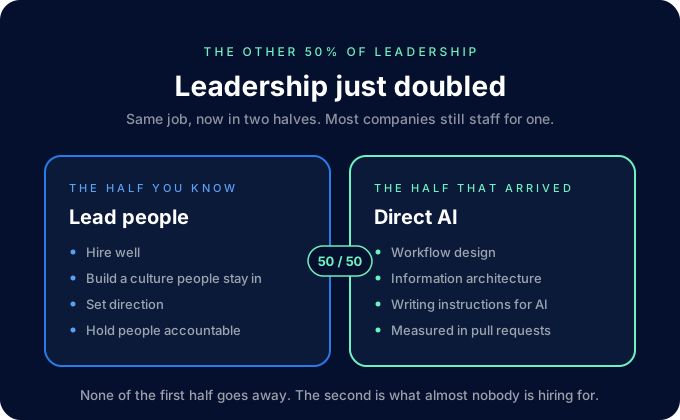
The half you know stays, and a second half arrives next to it
The first half of leadership has not changed and is not going anywhere. Hire well. Build a culture people want to stay in. Set direction. Hold people accountable. If you are good at leading people, keep doing it. None of that gets automated away.
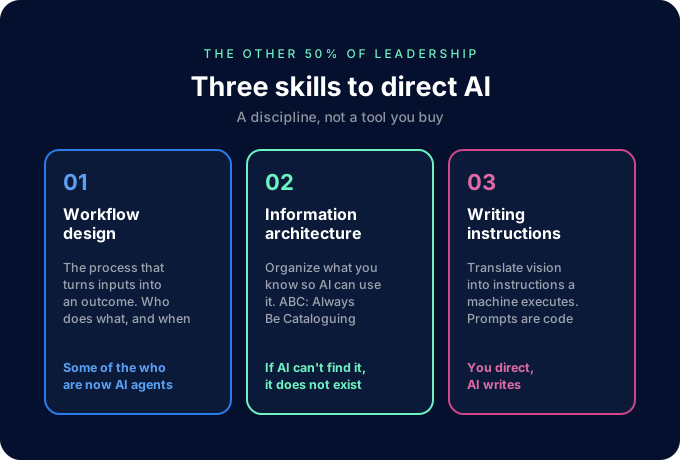
The second half is new. It is the part of leadership that lets a leader direct AI rather than only manage people, and it rests on three skills. Each one is a discipline, not a tool you buy.
Workflow design is the org chart for the AI era: deciding the process that turns inputs into an outcome. Who does what, in what order, who owns the result, and where a human stays in the loop. The only thing that changed is that some of the "who" are now AI agents, and you design for them the same way you design for people.
Information architecture is organizing your information so it can actually be used. At the AI Officer Institute we call it ABC, Always Be Cataloguing. The rule is blunt: if your AI cannot find it, it does not exist. Most companies fail here first, because their knowledge lives in inboxes, in chat threads, and in two or three people's heads. You cannot point an agent at a mess and expect a clean result. The discipline is unglamorous and it is the whole game. You decide what gets written down, where it lives, and how it stays current, so a person or an agent retrieves the right thing in seconds rather than asking around.
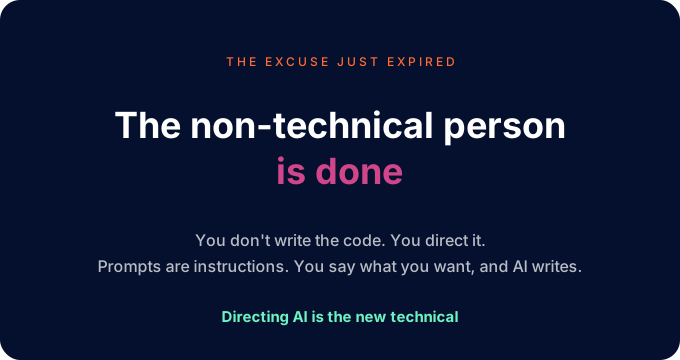
Writing instructions for code and AI is translating a vision into instructions a machine can execute. Prompts are code. System instructions are code. Scripts and apps are code. You do not type the code yourself. You direct, and AI writes it. But you have to say exactly what you want, with enough precision that the result is the thing you pictured.
Notice the order, because it is causal. Leadership doubled, so you reorganize the work around the new half. Once the work is organized, you need a way to know the new half is paying off. Each piece earns the next. The three skills are what make the reorganization possible, and the reorganization is the next section.
Read your company through four offices: a lens, not a mandate
The four offices are a lens, not a mandate. Revenue, Operations, Talent, and Innovation are a way to read your company's data and work, so you can see where AI should own an outcome. The most nimble organizations will likely re-org around this view. Re-org is not required. What is required is that you can see each office clearly enough to point AI agents at specific outcomes inside it.
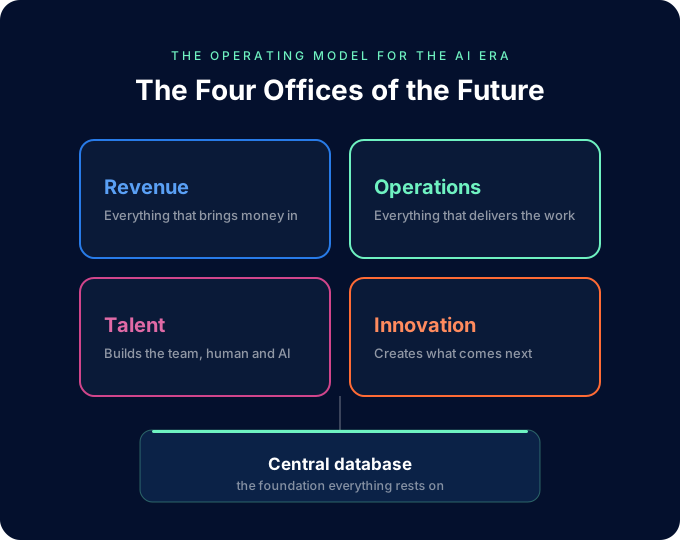
Whether or not you redraw the org chart, the lens only works if the data underneath it is organized. Underneath all four offices sits a central database. This is not optional and it is not a detail. No central database, no organized information, no leverage. It is the floor the whole structure stands on, and if you skip it, nothing above it will hold.
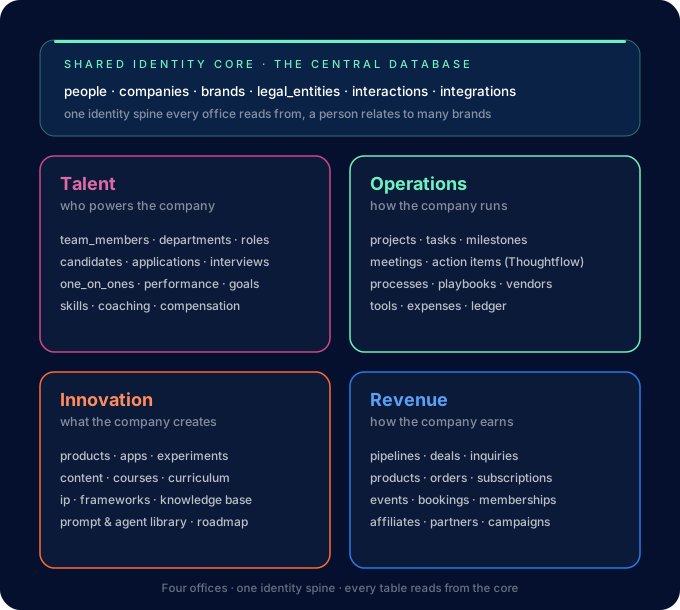
You read each office with the same four questions. A CTO can take these into a room on Monday and start mapping.
- What is the process? The sequence of steps that turns inputs into the outcome.
- What outcome does it generate? The concrete thing this office ships, stated so you would know it when you saw it.
- How many human tokens does it need? How much actual human attention and judgment the process requires, honestly counted.
- Where does AI fit on the team? Which steps an agent owns, and where a human stays in the loop.
Run that on Revenue, then Operations, then Talent, then Innovation. Most of your design effort and most of your hidden cost will concentrate in a couple of offices, not spread evenly. In our experience Talent is the most underbuilt of the four. It is where the old playbook is stickiest, where "we will just hire another person" is still the reflex, and where the central database is usually thinnest. It is also where reading the office right changes the math on everything else, because Talent is where you decide how many humans the rest of the company actually needs. An audit reads all four offices before you point an agent or hire a person into any of them, so you are not backfilling a seat you no longer need.
Leverage is a number, not a vibe
Here is how you know the new half is working. The premise of the whole shift is that a single human token, one unit of skilled human attention and judgment, can be leveraged almost without limit by AI. That stays abstract until you tie it to output you can count.
You know leverage is real when concrete units of value ship into the digital world. Pull requests. Features. Things that exist that did not exist yesterday, measured against the goals you set. Either you are hitting those goals or you are not. There is no fog. Value stops being a story you tell in a board meeting and becomes a number you can point at.
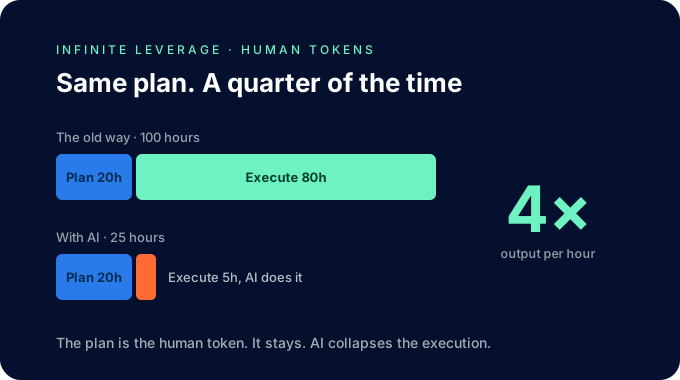
This should change how you read every AI pitch you get. The right question is never "do we have AI." It is "what shipped this week that would not have shipped without it, and did it move a goal we already named." If the answer is a demo nobody uses, you bought a tool. If the answer is features in production and goals hit with fewer human tokens spent, that is leverage, and you can put it on a chart.
I will give you the number from my own company, and I want to be careful with it, because the easy version of this story is a lie. Edge8 is about twenty percent smaller in 2026 than it was. That is mostly attrition, and I am not proud of it. People left on their own, and I only actually let two go. The rest chose to move on, and I would not dress that up as strategy. Over the same window, revenue is up sixty percent since January.
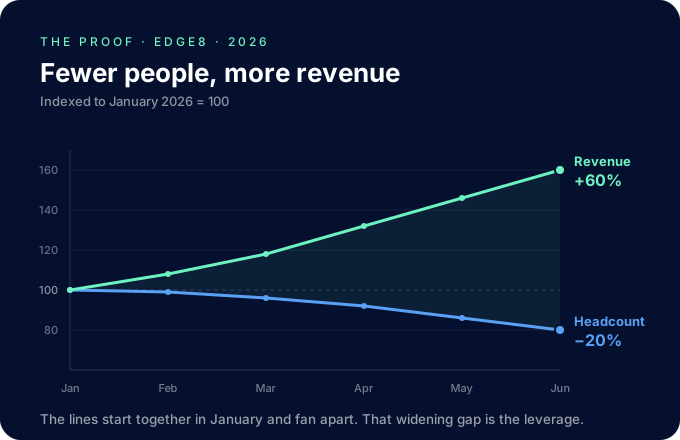
Sit with that gap. A fifth fewer people, sixty percent more revenue, and the two lines started together in January and fanned apart from there. I did not cut headcount to juice a margin, and I would not recommend that to anyone. What happened is that as people left, I did not reflexively backfill every seat one for one. AI absorbed the work, the structure held, and the business grew anyway. That distance between fewer people and far more revenue is exactly what the second half of leadership looks like on a P&L. It is what I mean by eight times the leverage: not a slogan, but a measured outcome, carried with some humility about how the headcount actually changed.
What changed is speed, not readiness
The objection I hear most is that AI is not ready yet. That misreads what is happening. The point is not that AI is finally good enough. The point is that the speed of AI exposes bad process.
Knowledge that lives in one person's head. A team that quietly depends on a single superstar. Workflows nobody ever wrote down. For years those were tolerable. Under the speed AI now demands, they are revealed for what they always were: simply poor business practice. Good practice means documented workflows and organized information that does not evaporate when someone takes a holiday or quits. AI did not create that standard. It just made the gap impossible to ignore.
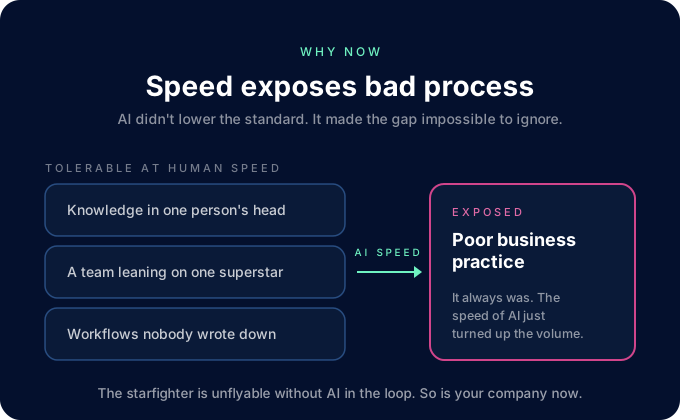
Think of the old science-fiction starfighter. No pilot is fast enough or sharp enough to fly the thing alone; the AI is in the loop because the machine is otherwise unflyable. Your company is now that complex and that fast. You do not need AI implanted in anyone's body. You need it on the team, because without it you cannot handle the speed.
Founders who can build tend to win
I will be honest about my own miss, briefly, because it is the reason I trust this. I had been teaching these ideas without practicing them, and I was turning into the thing I have always hated: someone who teaches but cannot do. So I went and did the foundational work myself. I centralized the database for our EO Vietnam business group, then my own company's, and I did the core build personally, using engineers to check and extend rather than to start from scratch.
The lesson held: the vision is too hard to hand off cold. This is why founder-engineers tend to win and founder-business-people tend to struggle. The founders who can translate a vision directly into instructions a machine executes move faster than the ones who describe it through three layers of telephone.
It is also why the two roles you staff for are specific. You need AI officers to run the program: people who own the four offices, the design questions, and the central database. And you need AI engineers to build it: people who turn the vision into working systems and ship the pull requests you measure against. You audit before you hire either one, so you are buying the capability your structure actually calls for, not the one a job board happens to list.
Where to start
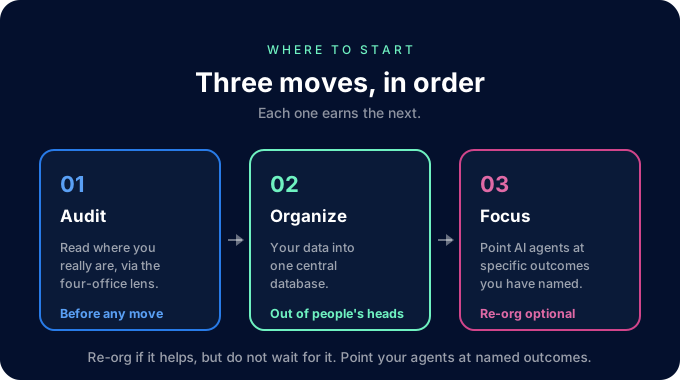
The sequence is not complicated, though it does take discipline. Audit where you really are, through the four-office lens, not where the org chart says you are. Organize your information into one central database, so it stops living in people's heads. Then point your AI agents, and the people you hire to run them, at specific outcomes you have named. Re-org if it helps. Do not wait for it.
This is what we do at Edge8. We run the audit that reads your four offices before you spend a dollar on headcount, and we staff the AI officers and AI engineers who make the second half of leadership real inside your company. Not seats for the sake of seats. The specific capability your structure is missing.
If you have been spending on AI and waiting for leverage that never shows up, the gap is the second half of leadership in the AI era, and it is fixable.
Book a conversation with us. We will start with where your company actually is, and what eight times the leverage would take to reach it.
The Payroll IQ case study shows a CEO who built this skill set at a retreat and then brought her team into it.
Frequently asked questions about leadership in the AI era
What is the other 50% of leadership in the AI era?
The first half of leadership stays the same: hire well, build culture, set direction, hold people accountable. The other 50% is the skill set that lets a leader direct AI rather than only manage people. It rests on three skills: workflow design (deciding the process that turns inputs into an outcome, now including AI agents), information architecture (organizing information so AI can find and use it, what the AI Officer Institute calls Always Be Cataloguing), and writing instructions for code and AI (translating a vision into precise instructions a machine executes).
Do I have to reorganize my company into four offices?
No. The four offices, Revenue, Operations, Talent, and Innovation, are a diagnostic lens for reading your company's data and work, not a mandatory re-org. The most nimble organizations will likely re-org around the view, but it is not required. What is required is that you can see each office clearly enough to point AI agents at specific outcomes inside it, and that the data underneath sits in one central database.
How do you measure the value of AI?
Measure it by concrete units of value shipped into the digital world: pull requests and features, counted against the goals you set. Either you are hitting those goals or you are not. The right question is never whether you have AI. It is what shipped this week that would not have shipped without it, and whether it moved a goal you already named, with fewer human tokens spent. That is infinite leverage you can put on a chart.
Why does AI expose bad business processes?
The point is not that AI is finally good enough. It is that the speed of AI exposes bad process. Knowledge living in one person's head, reliance on a single superstar, and workflows nobody wrote down were tolerable for years. Under the speed AI now demands, they are revealed as poor business practice. Good practice means documented workflows and organized information that does not live in one person's head.
What is infinite leverage, and what is eight times the leverage?
Infinite leverage is the idea that a single human token, one unit of human attention and judgment, can be leveraged almost without limit by AI. You know it is real when measurable output ships against goals. At Edge8 the proof is honest: the company is about twenty percent smaller in 2026, mostly through attrition the founder is not proud of, with only two people let go. Over the same window revenue is up sixty percent since January. That gap, fewer people and far more revenue because AI absorbed the work instead of every seat being backfilled, is what eight times the leverage means in practice.
Who do you hire first, an AI officer or an AI engineer?
Neither, until you have audited. The audit reads your four offices and shows where the hidden cost and missing capability actually sit. Then you hire to the gap. AI officers own the program (the offices, the design questions, the central database), and AI engineers build the systems and ship the pull requests you measure against. Hiring before the audit is how you backfill a seat your new structure no longer needs.